Home Blog Page 2

Water Diet: The Key to a Healthy Life

0
What is the water diet?
Water diet what is it

Water Diet: The Key to a Healthy Life

These days, the importance of a healthy lifestyle is being emphasised more than ever. People are trying out many different diets with the aim of managing their weight, boosting their energy levels and improving their skin health. However, the water diet can help you prioritise your health by offering a simple and effective approach. In this article, we will examine in detail what the water diet is, how to follow it, and its health benefits.

What is the Water Diet?

The water diet is a dietary plan based primarily on increasing daily water intake. The body’s need for water varies from person to person, but it is generally recommended to drink at least 8 glasses of water a day. The water diet cleanses the body, regulates digestion and offers a range of health benefits by encouraging the habit of drinking more water.

Water Diet How is it done?

water diet There are some important points to bear in mind when following the water diet. Here are the steps to help you follow the water diet successfully:

Set a daily water intake; Determine how much water you need to drink every day. This amount depends on your age, gender, activity level and weather conditions may vary depending on these factors. As a general guide, try to drink at least 8 glasses water a day.

Make a habit of drinking water; Make drinking water a regular habit. Make a point of drinking water before, during and after meals. You could also carry a water bottle with you to remind yourself to drink water at regular intervals throughout the day.

Keep track of the benefits of drinking water; When you follow a water diet, observe how your body reacts. You may start to feel more energetic, notice improvements in your skin health, and find that your digestive problems have eased.

The Benefits of a Water Diet

The water diet has a number of positive effects on health. Here are some of the key benefits of this diet:

Personal hygiene; Water helps flush toxins from the body. Regular water intake helps the kidneys function more effectively and aids in the elimination of toxins through urine.

Digestive regulation; Drinking enough water, digestive system’s proper functioning contributes to. It can help alleviate constipation and ease digestive problems.

Skin health; Water diet, skin health can improve. Drinking more water helps, maintain the skin’s moisture balance, can reduce acne and helps your skin look more radiant and a26> healthier appearance contribute to.

Weight management; Drinking water can increase the feeling of fullness and a9> thus reducing the likelihood of eating too much. This can also help with weight control as well.

Boosting energy levels; Dehydration can lower your energy levels. Drinking water can boost your energy levels and help you feel more energetic.


Water Diet Implementation Precautions To Be Taken Requirements

Water diet When following the water diet there are some important points to keep in mind! a9> important points to keep in mind !

Don’t overdo it; Too much of anything can be harmful. Drinking too much water can lead to electrolyte imbalances in the body. Be careful not to exceed your water intake.

Customize; Every individual’s water need is different. Age, gender, weight, activity level and other factors affect water needs. Create a water consumption plan that suits your needs.

Be careful; Sip your water slowly. Drinking large amounts of water quickly can put strain on your digestive system.

Don’t forget other liquids; Drinking only water isn’t enough. Don’t forget to also consume other healthy beverages such as milk, fresh fruit juices, and herbal teas.

Expert advice; If you have any health concerns or questions about the water diet, consult a healthcare professional. They can recommend the water intake plan that’s best for you.

Water The Importance of Your Diet

Taking care of your health is the key to living a long and healthy life. A water-based diet can easily contribute to your well-being. Drinking water regularly cleanses the body, regulates digestion, improves skin health, and can help with weight management. It can also boost your energy levels and enhance your overall quality of life.

Water Diet and Healthy Living

A healthy lifestyle should be a top priority for everyone. To that end, many people try different diets, exercise, and reevaluate their lifestyles. However, the importance of water is often overlooked. A water-based diet can be an effective tool for prioritizing your health and properly supporting your body.

Water Diet and Health Relationship

Water diet, body for basic a need to meet for the purpose of has been designed. To increase water consumption. The body is composed of approximately 60% of water and water, performs many important functions in the body. Here are water’s health related key effects:

Elimination of toxins; Water acts as a cleanser that helps purify the body. It removes toxins and waste products from the body through the kidneys and urinary tract.

Digestive regulation; Adequate water intake regulates the digestive system. Intestinal motility is facilitated and constipation is prevented.

Skin health; Water is very important for skin health. Drinking enough water helps maintain skin hydration and reduces problems such as acne and dryness.

Weight management; Drinking water, can increase the feeling of fullness , which in turn can reduce the tendency to overeat. For this reason, it can help with weight management.

Energy levels increase; Water shortage, energy levels can decrease. Drinking water, can increase energy and help you feel more energetic and more alert.

The Basic Rules of the Water Diet

Water diet When following a few basic rules it is important to pay attention to:

Other drinks don’t forget; Drinking water alone is not enough . Milk, fresh fruit juices, herbal teas and other healthy drinks as well don’t forget to consume. These drinks also help meet the body’s fluid needs as well.

Make sure you monitor yourself; While following a water diet pay attention to your body’s reactions. Do you feel more energy? Have you noticed improvements in your skin health? Have your digestive issues decreased? Ask yourself these questions regularly to yourself every day.

Consult a healthcare professional; If you have any health issues or concerns about the water diet, consult a healthcare professional. They can recommend the water intake plan that’s best for you and adjust it based on your health condition.

The Water Diet and Practical Application

Water diet, to contribute to your health is an excellent option, however this diet is a10> option, but you might be wondering how to integrate this diet into your daily life a17> into your daily life. Here’s a practical way to incorporate the water diet into your daily life. a28> way to help you implement it into your daily life:

Develop a Habit of Drinking Water; Don’t forget to drink water. Drinking a glass of water as soon as you wake up in the morning can help you start your day with energy. Also, make it a habit to drink water before and after meals. You can easily maintain your water-drinking habit by carrying a water bottle with you. Always keep water with you at work, school, or while traveling. This will help you remember to drink water.

To make the taste of water a little more interesting to … natural fruit slices or mint leaves can be added.

Pay attention to your thirst and and your body’s signals to you when it needs water and learn when. Quench your thirst by drinking water often and regularly.

Focus on drinking water by limiting other beverages. Avoid carbonated drinks, sugary drinks, and caffeinated beverages, or keep them to a minimum.

Plan your water intake based on your activities and the time of day. You may need to drink more water than usual when exercising or on a hot day. Set reminders to drink water on your phone or computer. This will help ensure you don’t forget to drink water.

Make a habit of drinking water with every meal. For example, make it a habit to drink a glass of water before every breakfast. Plan to drink water at specific times throughout the day. By sticking to these times, you can ensure you drink water regularly.


ABSTRACT : Water diet related scientific articles are quite few. Those who follow it may be satisfied, they may lose weight quickly, a14> per kilogram weight loss however negative side effects may be observed. For example excessive fluid intake can cause the kidneys to work too hard overwork the kidneys and lead to kidney stones as a result. Blood sugar level may drop and blood pressure may drop as a result of this. Due to insufficient nutrition, muscle loss, hair loss, dizziness may be observed.

For this reason, you need to maintain a balance. Do not aim to lose more than 4 kilograms per month.

For more nutrition and diet programs: https://fitnessandbeast.com/beslenme/
Wall Pilates and Physical Health Benefits

0
Wall pilates
Wall Pilates

Wall Pilates and Physical Health Benefits

Pilates, people’s physical and mental health supporting a form of exercise method. Developed by Joseph Pilates, this exercise system, is preferred by many people. In recent years, wall Pilates has gained popularity. In this article, we will explain what wall Pilates is, how it is done and the physical health benefits a40> benefits for physical health in detail. In addition, wall Pilates and related questions that people are curious about we will also answer

Wall Pilates What is it?

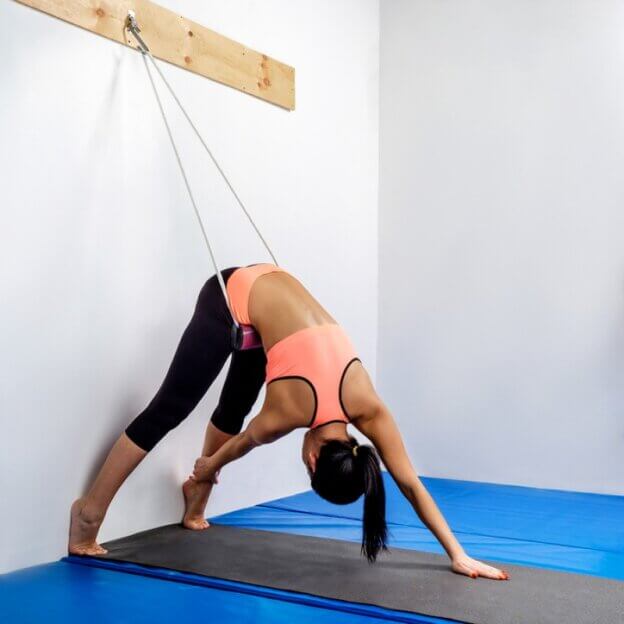
Wall Pilates, traditional Pilates exercises against a wall are performed in this manner.

Wall, body weight supporting and exercises more effective by a factor as used. This exercise method, whilst preserving the fundamental principles of Pilates, develops balance, flexibility, strength and muscle tone aims to improve .

Wall Pilates How is it done?

Wall Pilates, under the guidance of a professional Pilates instructor or suitable a training video using at home can be done. Basic By following the steps below you can do wall Pilates:

Step 1: Preparation
Put on comfortable workout clothes and place your exercise mat against the wall.
Take off your shoes and choose to work out barefoot or in non-slip workout socks.
Before starting the exercises, take a moment to regulate your breathing and engage your core while maintaining good posture.

Step 2: Wall Exercises

Wall Pilates
Wall Pilates

Exercise 1: Wall Bridge With this exercise, you can strengthen your abdominal and back muscles and abs and back muscles can be strengthened. Lie on your back on the floor and place your feet against the wall in a parallel position a18> position against the wall. Breathe in and squeeze your gluteal muscles while lifting your hips upward toward lift then exhale while lower and as the movement continues lift your head and shoulders upward < a41> abdominal muscles by contracting a half crunch do.

Wall sit
wall pilates wall sit

Exercise 2: Wall Sit This exercise helps strengthen your leg and calf muscles and improve flexibility. Lean your back against a wall and sit down with your knees bent. Make sure your back is straight, and place your hands on the wall or on your thighs. Inhale as you lift your heels off the ground and raise your heels. Exhale as you return to the starting position.

wall plank
wall plank

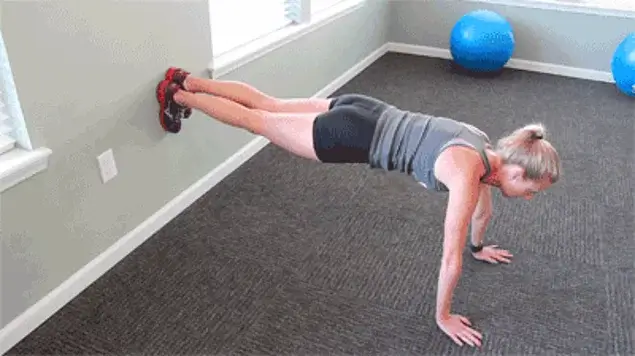
Exercise 3: Wall Plank This exercise can strengthen your abdominal < a9> strengthen and improve your balance skills. Stand close to position bend over and place your legs one at a time against the wall rest them against the wall. Hold your entire body as long as you can while tensing.

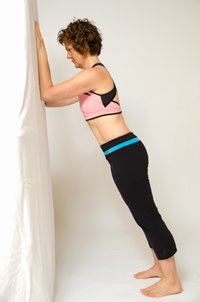
If you failed in your first attempts. You can try the current version.

standing wall plank

The Physical Health Benefits of Wall Pilates

Wall Pilates offers numerous physical health benefits. Here are the key benefits of this exercise:

Improvement of posture ; Proper posture, in the body balance and alignment ensures. It strengthens the muscles that support the spine and helps correct posture . Good posture, can reduce back and neck pain.

Improving flexibility; Helps improve flexibility in the body. Flexibility increases joint range of motion, reduces muscle tension, and provides muscles with greater freedom of movement.

Building muscle strength; This includes exercises that specifically target the abs, back, legs, and arms. As a result, strong and resilient muscles are developed throughout the body.

Improving balance and stability; The exercise is designed to improve balance and stability. This helps maintain balance during daily activities and reduces the risk of falling.

Breath control development; Pilates emphasizes breath control. Wall Pilates exercises during proper breathing and exhaling techniques are learned. This also promotes relaxation and reduces stress and is beneficial for these purposes.

Body awareness enhancement; Body awareness enhancement aimed at movements includes. Being aware of every muscle group in the body and, makes movements more efficient and effective.

Better sleep; Regular wall Pilates exercises can improve sleep quality and help combat insomnia.

Common Mistakes Made in Pilates

Wall Pilates: It’s important to avoid some common mistakes when doing Wall Pilates. Here are some tips on common mistakes in Wall Pilates and how to prevent them:

Slouching and Hunching; Wall Pilates Proper body alignment is crucial during these exercises. However, one of the most common mistakes is bending or hunching over while performing the exercises. Incorrect posture, especially in the lower back and spine, can lead to unwanted pain and injuries.
How to Prevent It: When starting wall Pilates exercises, make sure your body is properly aligned. Pull your shoulders down and keep your back straight. If you experience lower back or back pain, start with lighter exercises and be careful not to strain your body. You can also check your form by looking in a mirror or having a friend watch you while performing the exercises.

Overexertion
Overexertion during exercises is another common mistake made in wall Pilates. Trying to push your muscles too hard right away can increase the risk of injury and make it harder to achieve the desired results.
How to Prevent It: When starting exercises, choose movements appropriate for your level. Progress slowly and work within your body’s limits. Regular exercise will help you build strength over time and eventually move on to more advanced exercises.

Breath Control
Pilates exercises should be performed using proper breathing techniques. Breath control ensures that movements are performed efficiently and helps your body relax. However, some people may overlook proper breathing technique while doing the exercises.

How to Prevent It: It is important to learn proper breathing techniques before starting exercises. Generally, relax your muscles as you inhale and tense them as you exhale. Pay attention to your breathing rhythm and try to breathe in sync with your movements.

Losing Balance
Wall Pilates exercises, body balance improvement help while, some people may lose their balance while performing the exercises.

How to Prevent It: Perform the movements slowly and with control to maintain your balance. If you have trouble maintaining your balance at first, you can do the exercises while holding onto a support or using a chair. Your balance will improve over time.

Form Distort
Wall Pilates exercises must be performed with proper form. Incorrect form can reduce the effectiveness of the exercises and lead to adverse effects.

How to Prevent It: Pay attention to your form while doing the exercises and perform the movements in a controlled manner. If you have trouble maintaining proper form, you can seek help from a Pilates instructor or follow along with video guides.

Wall Pilates and Other Exercise Types Differences Between

Wall Pilates differs from other types of exercise in several ways. Here are the key differences between Wall Pilates and other types of exercise:

Support and Anchor Point
Wall Pilates: Wall Pilates is a technique where exercises are performed by leaning against a wall or using the wall. The wall provides support to the body, allowing you to perform movements in a more controlled manner. Exercises performed against a wall distribute your body weight evenly, offering an additional point of support and stability.

Other Types of Exercise: In other types of exercise, additional support or a point of contact is generally not used. For example, bodyweight exercises are performed without equipment such as resistance bands or weights.

Body Awareness
Wall Pilates: Wall Pilates exercises enhance your body awareness and help you engage your muscles more consciously. The movements performed against a wall help you feel more in tune with your body and maintain proper form.

Other Types of Exercise: Body awareness is important in other types of exercise as well, but they may not require as much focus or conscious effort as exercises performed against a wall.

Flexibility and Range of Motion
Wall Pilates: Wall Pilates exercises increase range of motion and improve flexibility by utilizing the wall. The support of the wall allows muscles to work in a longer, more controlled manner.

Other Exercise Types: Other exercise types also flexibility and range of motion are important, however wall Pilates is as intense a17> form may not be focused on this topic.

Target Muscle Groups
Wall Pilates: Wall Pilates, typically legs, glutes, abs, back and arm muscles targeting exercises includes. Movements performed while leaning against a wall, are specifically designed to strengthen the core of the body.

Other Exercise Types: Other exercise types, wall Pilates like special a focus does not require and can work out a broader range of muscle groups. For example, weight lifting exercises target more muscle group target.

Equipment Usage
Wall Pilates: Wall Pilates requires basic equipment such as a yoga mat, a wall, and a resistance band. Exercises performed against the wall are supplemented with additional equipment.

Other Types of Exercise: Other types of exercise vary and may involve the use of various pieces of equipment. For example, exercises performed at the gym often involve the use of weights, machines, and other equipment.

Frequently Asked Questions

Is it suitable for everyone ?

-Yes, it is generally a suitable form of exercise for everyone. However, if you have a chronic condition, it is recommended that you consult your doctor before starting a new exercise program.

How many times should it be done?

-Your exercise program may vary depending on your personal needs and goals. Doing it 2–3 times a week is usually sufficient.

Does it help with weight loss?

-A regular exercise program and along with a5> healthy diet can help you lose weight on its own. However on its own it does not lead to weight loss.

How long does it take for results to appear?

-Everyone’s body may react differently, but with and proper exercises done regularly a12> a few weeks within the first results can be seen it is possible.

Can pregnant women do it?

-Exercising during pregnancy is generally beneficial, however during pregnancy it is important to consult your doctor before starting.

Pilates Guide: What is it, Benefits, and How to Get Started

0
pilates
Pilates

Pilates: The Key to Body Harmony and Health

Welcome, dear readers! Today we’re diving into the fascinating world of Pilates — exploring its incredible benefits for both body and mind, the muscles it targets, and how to perform each exercise step by step. Let’s get started!

What Is Pilates?

Joseph Hubertus Pilates


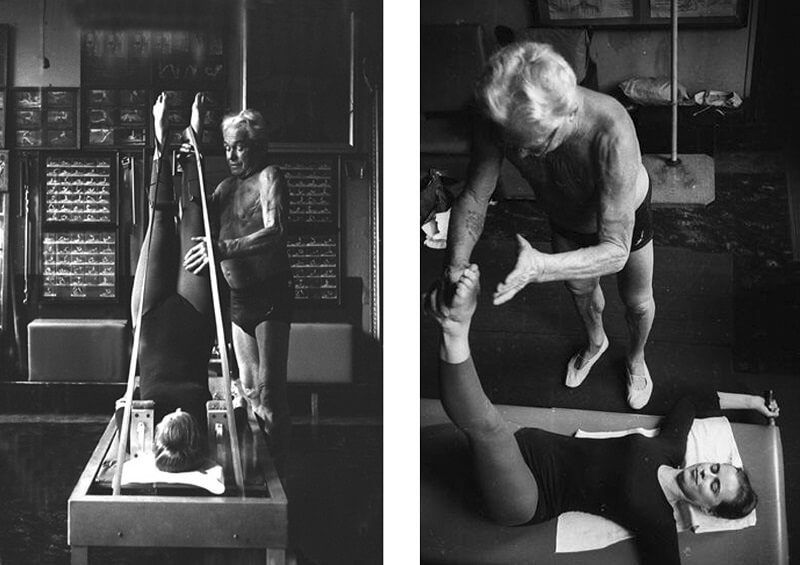
Joseph Hubertus Pilates was born on December 9, 1883, in Mönchengladbach, Germany. His father, Heinrich Friedrich Pilates, who was born in Greece, was a metal worker and an enthusiastic gymnast, while his mother, of German origin, was a homemaker.

Joseph was a sick child. Asthma, rickets and rheumatic fever suffered from and all life to developing his physical strength he devoted. His father introduced him to gymnastics and physical training as well as jiu-jitsu and boxing such as martial arts were introduced to him. 14 years old he was in such good shape that he could pose for anatomical illustrations by the time he reached 14.

Joseph came to believe that the root cause of poor health lay in “modern” lifestyle, bad posture, and inefficient breathing. To address this, he developed his own exercise method and designed the equipment needed to perform these exercises. When he moved to England in 1912, he made a living as a professional boxer, circus performer, and self-defense instructor at police schools and Scotland Yard.

During World War I, British authorities interned Joseph along with other German nationals at Lancaster Castle, where he taught wrestling and self-defense classes — and proudly claimed that his students would emerge stronger than before their imprisonment.

He studied the movements of yoga and animals, and trained his fellow prisoners on fitness and exercise. He noted that the instinctive movements of cats, in particular, inspired his fitness regimen. It was there that he began developing and teaching the minimal-equipment mat exercise system that would later become known as “Contrology.”

He was later transferred to the Knockaloe internment camp on the Isle of Man. During this forced break, he intensively developed the concept of his integrated, comprehensive physical exercise system, which he called “Contrology.”

Contrology is about using the mind to encourage muscular control, with focused attention on the core postural muscles that keep the body balanced and support the spine. Pilates exercises teach body awareness, proper breathing, and spinal alignment, while strengthening the deep trunk and abdominal muscles.

Some of the first instances of the use of Joseph’s exercise methods, seriously injured veterans included their rehabilitation . After the First World War, Joseph returned to Germany andRudolf Laban and dance and physical exercise fields collaborated with leading experts.

He provided training to police officers in Hamburg. He emigrated to the United States around 1925.

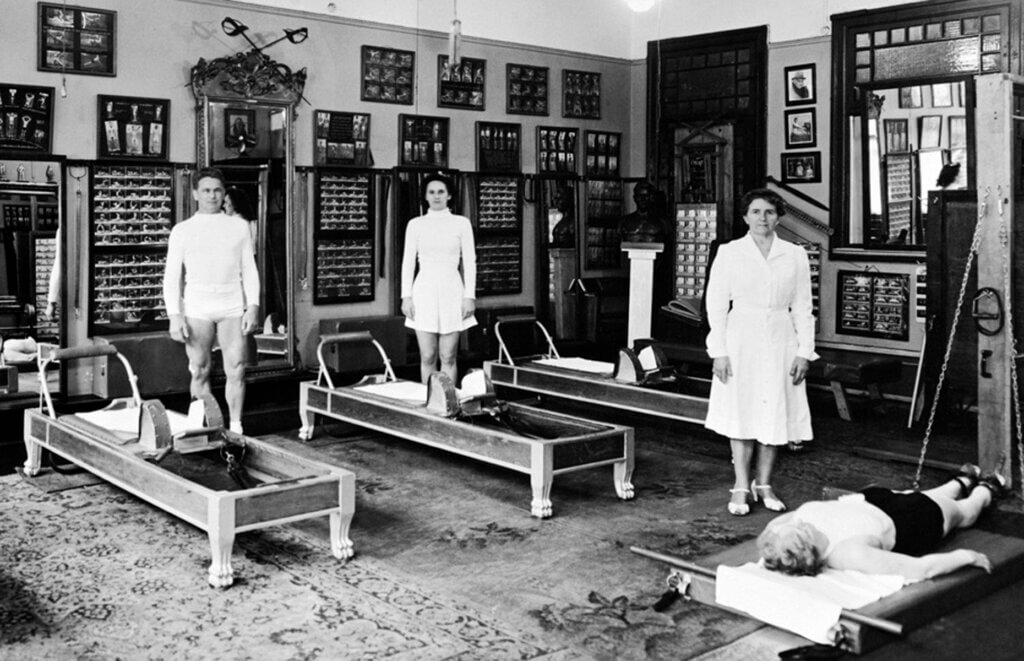
He met his future wife, Clara, on the ship bound for America. The couple established a studio in New York and taught and supervised their students directly until the 1960s. Joseph and Clara quickly built a loyal following within New York’s local dance and performing arts community. Renowned dancers such as George Balanchine, who arrived in the United States in 1933, and Martha Graham, who came to New York in 1923, became devoted followers and regularly sent their students to Pilates for training and rehabilitation.

The exercise regimen improved their flexibility, strength, and endurance. Shortly after it became known that ballerinas were attending the Pilates studio on 8th Avenue, society women followed suit.

Joseph Pilates

Joseph Pilates, including Contrology and Your Health Through Return to Life as well as featured in many books he wrote and at the same time 26′ and more than 26 patents were cited a prolific and an inventor.

Pilates continued to advocate for and teach his method well into his later years, even though he was no longer physically able to perform the exercises himself. Joseph Pilates died in New York in 1967 at the age of 83 from advanced emphysema.

Pilates How Is it done?

Pilates before starting it, it is important to work with a qualified instructor in this field. Learning the correct techniques and aligning your body properly a19> aligns your body, reduces the risk of injury to the minimum and exercises maximum benefit ensuring helps you. Pilates mat on or using special equipment for various exercises. a38> equipment performed various movements body is worked out. These exercises involve breath control and muscles in a conscious manner a51> manner :

Pilates Mat Exercises: Pilates mat exercises, body weight using performed basic exercises include. abdominal, back, hip, legs and arms muscles strengthens and flexibility improves. Pilates mat exercises, at home with ease is an effective form of workout that you can do.

Pilates Equipment: Pilates exercises performed using specialized equipment such as the reformer, Cadillac, chair, and barrel challenge your body further, allowing you to target your deep muscles. This equipment provides resistance to help you build strength and improve flexibility.


Basic Pilates Exercises

Pilates exercises can vary in difficulty, but the basic movements are essential for every level. Here are some of the basic exercises:

Hundred (Yüz)

pilates hundered
pilates hundered

One of the most basic and effective exercises in Pilates is the Hundred, helps strengthen the abdominal muscles.

  • Lie on your back, bend your knees, and place the soles of your feet on the floor.
  • Rest your head and shoulders on the floor, and spread your arms out to the sides.
  • Take a breath and raise your arms up and hold them parallel to the ground as shown in the figure. a8> position hold them.
  • Lift your legs off the ground and hold them parallel to the ground and keep them that way.
  • As you quickly swing your arms upward, exhale and lift your head and shoulders.
  • In this position, breathe in and out 100 times while swinging your arms up and down.

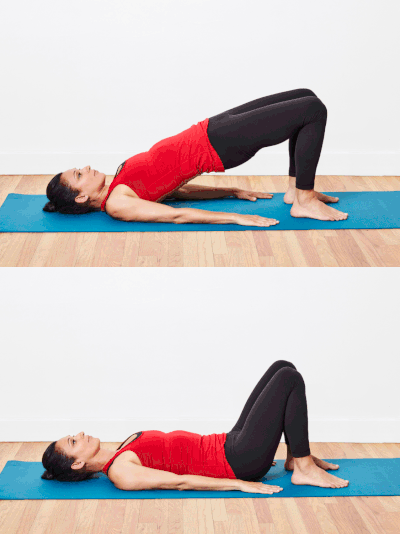
Bridge (Köprü)

Pilates Bridge
Pilates Bridge

The bridge exercise helps strengthen the hip and lower back muscles and improves spinal flexibility.

  • Lie on your back, bend your knees, and place the soles of your feet on the floor.
  • Extend your arms out to the sides and position your palms facing the floor.
  • As you inhale, lift your hips up to form a bridge over your shoulders.
  • In this position, wait a few seconds and then exhale as you slowly return ​​to the starting position.

Plank (Plank Duruşu)

Plank

Plank, abdominal, back and arm muscles strengthening for a great exercise is.

  • Lie face down on the floor and stretch out, place your hands at shoulder height on the floor.
  • Place the tips of your toes on the ground and keep your body straight a straight line so that your body forms a straight line.
  • Tighten your abdominal muscles and try to keep your body as straight a8> as straight as possible.
  • Hold this position for a few seconds, then return to the starting position.

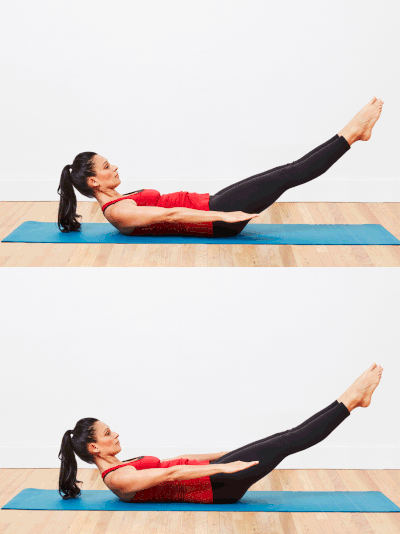
Teaser (Back-to-Back Sit-Up)

Pilates teaser

This teaser exercise strengthens the abdominal and gluteal muscles and improves balance.

Lie on your back on the floor, keep your legs straight on the ground, and extend your arms above your head.
Inhale as you lift your head and shoulders, and at the same time lift your legs upward.
Hold this position for a few seconds, then exhale as you return to the starting position.

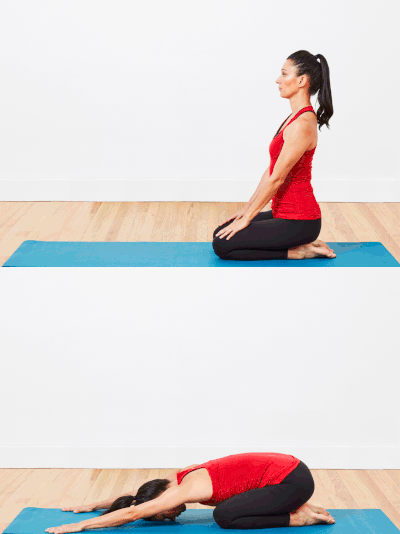
Child’s Pose

Pilates Child Pose
Pilates Child Pose

Child’s Pose is a position frequently used in Pilates classes for resting and breathing.
Sit on your knees and lower your hips toward your heels.
Inhale as you stretch your body forward and extend your arms toward the floor.
Lower your head toward the floor and relax.

Which Muscles Does Pilates Target?

Pilates, works out a wide range of muscle groups effectively in a way that engages them. Here are the main muscle groups that Pilates targets:

Abdominal Muscles Anatomy

Abdominal muscles (Rectus Abdominis): Pilates exercises, abdominal region by strengthening “six-pack” as well also known rectus abdominis muscles work out. Properly aligned abdominal muscles, help reduce back pain and a24> posture correction helpful is.


Back muscles (Latissimus Dorsi): The back muscles are important muscles that help maintain good posture. Pilates exercises strengthen the back muscles, improve your posture, and support spinal health.

Hip muscle system
Hip Muscle System

Gluteal Muscles (Gluteus Maximus): The gluteal muscles play a critical role in maintaining body balance and stability. Pilates exercises strengthen the gluteus maximus muscles, helping to tone the gluteal region and reduce the risk of injury.

Leg Muscle System
Leg Muscle System

Leg Muscles (Quadriceps and Hamstrings): Pilates exercises help strengthen and increase the flexibility of your leg muscles by working them in a balanced way. This helps you feel more energetic in your daily activities.

shoulder exercises

Shoulder and arm muscles (deltoids and triceps): Pilates strengthens your shoulder and arm muscles, improving your upper body strength. It also helps you achieve sleek, toned arms.

The Health Benefits of Pilates

Pilates not only builds muscle strength but also offers numerous benefits for your physical and mental health. Here are the positive health benefits of Pilates:

Increased flexibility and balance: Pilates exercises increase your body’s flexibility and improve your balance. A flexible body helps you move more comfortably during daily activities and reduces your risk of injury.

Posture correction: When performed with proper technique, Pilates helps align the spine correctly and corrects poor posture habits. This alleviates back pain and helps prevent future health issues.

Stress reduction and mental health: Pilates involves exercises focused on breath control and mental focus. This helps reduce your stress levels, calm your mind, and improve your mood.

Increased muscle strength and endurance: Pilates exercises work all the muscle groups in your body, increasing your strength and improving your endurance. This enables you to lead a more active lifestyle.

Reduced risk of injury and pain: Balanced and mindful muscle engagement reduces the risk of injury and helps alleviate chronic pain. Pilates is also an effective exercise method for rehabilitation.

Tips for Practicing Pilates Correctly

When doing Pilates, you can follow these tips to get the most out of your exercises.

Work with a qualified instructor: Pilates is an exercise method that requires learning proper form and technique. For this reason, it is important to work with a qualified Pilates instructor. Your instructor can create an exercise program tailored to your needs and help you perform the movements correctly.

Be consistent and persistent: To see the benefits of Pilates, you need to exercise regularly. Try to do Pilates at least 2–3 days a week and stick to your exercise routine. As you practice Pilates regularly, you’ll start to notice positive changes in your body.

Use proper breathing techniques: It is important to use proper breathing techniques when performing Pilates exercises. Pay attention to your breathing rhythm and breathe as deeply as possible. Proper breathing techniques help you engage your muscles more effectively.

Move at your own pace: When doing Pilates exercises, it’s important to be aware of your body’s limits. Move at your own pace and be mindful of the risk of injury. If you don’t feel ready to perform a certain movement, focus on easier exercises first and then gradually increase the difficulty.

The Benefits of Pilates

The benefits of Pilates are quite diverse and have positive effects on the entire body. Here’s a more detailed look at the benefits of Pilates:

Improves flexibility: Pilates exercises help improve flexibility. Each movement works by stretching and lengthening the muscles. As a result, flexibility in the body’s muscles and joints increases. People who practice Pilates regularly can move more comfortably in their daily lives and relieve muscle tension.

Body balance: Pilates core stability principle helps the body improve its balance. Centering, refers to the strengthening of the “powerhouse” region of the body known as the powerhouse and abdominal The abdomen, lower back, hip and pelvic bone surrounding muscles strengthening, provides better balance and stability in the body. In daily activities you can move more balanced and coordinated.

Improves posture: Pilates exercises support proper posture by strengthening the spine and the surrounding muscles. Practicing Pilates to correct poor posture habits can help reduce back and neck pain. Additionally, good posture positively impacts your body language and self-confidence.

Increases strength and endurance: Pilates exercises help strengthen the body’s muscles. Exercises that focus specifically on the abdominal, back, hip, and leg muscles make the body stronger. People who practice Pilates regularly feel less fatigue during daily activities and have greater physical endurance.

Relaxation and stress reduction: Pilates requires focusing on proper breathing techniques during exercises. Deep breathing helps calm the mind and reduce stress. As a result, those who practice Pilates experience improved concentration and mental clarity. People who practice Pilates regularly can lower their stress levels and achieve a more peaceful state of mind.

Frequently Asked Questions (FAQs)

Can Pilates help me lose weight? Yes, doing Pilates exercises regularly can help you lose weight. Pilates strengthens muscles, boosts metabolism, and helps reduce body fat percentage.

Can you do Pilates during pregnancy? Yes, it is safe to do Pilates during pregnancy with appropriate modifications, provided you consult your doctor first, and it can help you cope with the changes in your body.

Which is better, Pilates or yoga? Pilates and yoga are different exercise systems, and both offer distinct benefits. You can discover which exercise method is better for you by trying them out.

Is Pilates a suitable form of exercise for athletes? Yes, Pilates is a great form of exercise for athletes as well. Pilates incorporates key elements such as flexibility, balance, and core strength that will enhance your athletic performance.

What kind of clothes should I wear when doing Pilates? It’s important to wear comfortable and flexible clothing during Pilates exercises. By choosing clothes that don’t restrict your body’s movements, you can have a more effective workout.

Back Exercises | What Are They? | The Best Ones

0
Back Exercises
Back Exercises


Hello. In this article series, we will focus on back exercises. We will compile the most efficient, most isolated, and safest back exercises, and teach you in what order, with what form and weight, and with what type of warm-up to perform them.

As always, we will choose back exercises that hit the mark. We will avoid movements that can cause long-term injuries and explain why.

First, let’s get to know our back muscles.


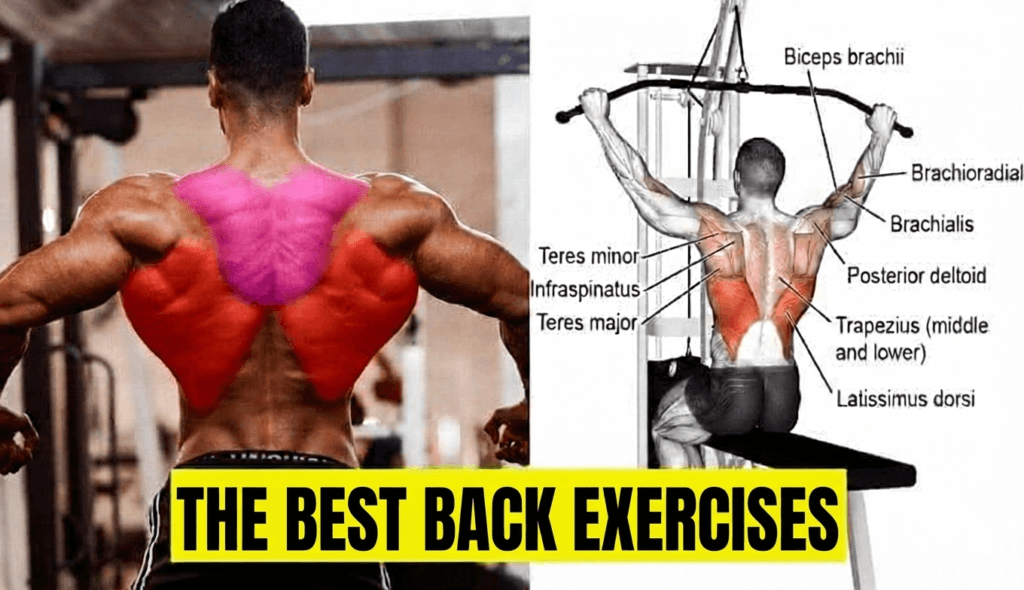
Back Muscles

Back muscles


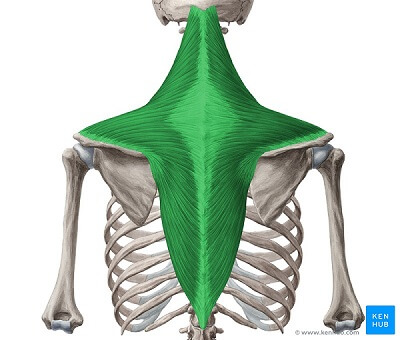
We can divide our back muscles into 4 parts: Trapezius, Lats, Mid-Back, and Lower Back. Let’s learn their names and functions in order.

Trapezius Muscles

Trapezius
Trapezius

We generally know the trapezius as a muscle extending between the shoulder and neck, but a large part of the muscle forms the mid-back region.

They are divided into 3 parts.

The trapezius muscle starts from the occipital bone, one of the bones at the back of the skull, and extends down to the T12 vertebra. Laterally, it covers the scapula (shoulder blade) and the clavicle (collarbone).

  • Trapezius superior part: Forms the upper part of the trapezius muscle. This is the part between the shoulder and the neck.
  • Trapezius middle part: Forms the middle part of the trapezius muscle. This is the level where the shoulder blades are located.
  • Trapezius inferior part: This is the lowest part of the trapezius muscle. It is the area below the shoulder blades, which we define as the mid-back, and just above our lower back.

Functions of the trapezius muscles: Lifting the shoulder upward with the shoulder blade, moving the skull, pulling the shoulder blade backward, and pulling the shoulder and shoulder blade downward.


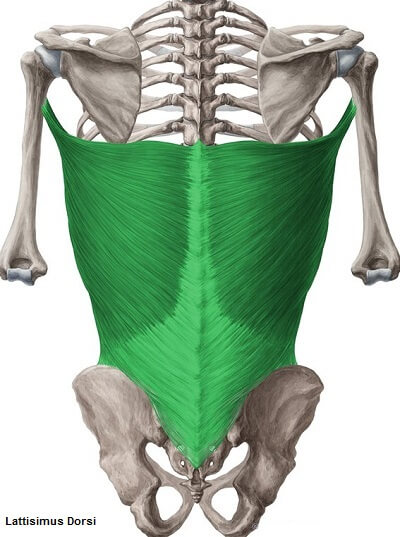
Latissimus Dorsi Muscles

Latissimus dorsi
  • Latissimus dorsi: Also known as the lat muscle. It extends longitudinally from the tailbone and hip bone up to the starting level of the shoulder blade. Laterally, it attaches to the inner-upper part of the humerus (upper arm bone). Its primary function is to pull the upper arm towards itself and downwards laterally.


Mid-Back Muscles

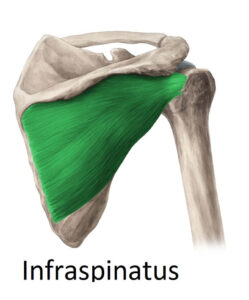
  • Infraspinatus: This is the muscle above the scapula (shoulder blade). It attaches to the outer-upper part of the humerus (upper arm bone). It pulls the humerus towards itself, providing external rotation.
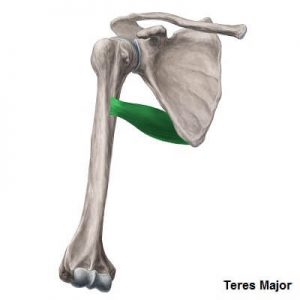
  • Teres major: Connects the lower part of the scapula (shoulder blade) to the inner-upper part of the humerus (upper arm bone). It causes internal rotation of the humerus, which has undergone external rotation.
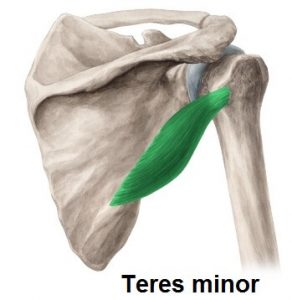
  • Teres minor: Located just above the teres major muscle. It connects the scapula (shoulder blade) to the outer-upper part of the humerus (upper arm bone) and causes external rotation of the humerus.
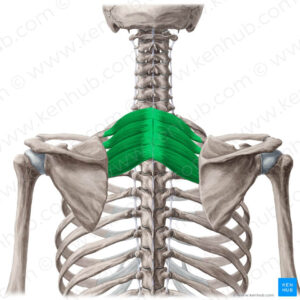
  • Serratus posterior superior: Starts by attaching to the spine from the lower end of the neck and connects to the upper-rear part of the ribs.


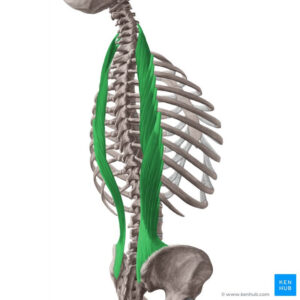
Lower Back Muscles

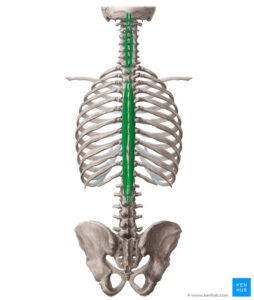
  • Spinalis thoracis: Muscles that support the spine and run longitudinally.
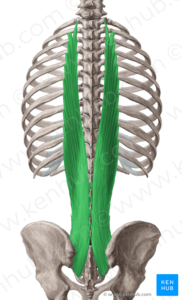
  • Longissimus thoracis: Starts from the tailbone, passes through the spine, and extends up to the neck.
  • Iliocostalis: Starts from the tailbone, passes through the spine, and extends to the upper part of the posterior ribs.

Their primary functions are to keep the spine stable and to perform backward flexion and rotation of the spine.


Now that we’ve learned about our back muscles, let’s determine how to train them.


Choosing Back Exercises

First, identify your needs. Do you need lat development, trapezius, mid-back, or lower back? Perform a general assessment in front of a mirror to determine which muscle to prioritize.

Place your weakest muscle at the top of your program and work with heavy weights while you are fresh. If necessary, you can do 2 exercises targeting that muscle group.

The back exercise program we will prepare shortly will be valid for athletes who do not experience developmental disorders. (We haven’t seen many with developmental disorders in their back muscles, only friends who are unaware of their excessively large traps, whose necks are triangular instead of their bodies.)

And I mentioned that we would choose fundamental movements. For example, we know that the function of the latissimus dorsi – lat muscle – is to pull the humerus (upper arm bone) towards itself. Given this, while Lat Pulldown effectively performs this function for lat development, doing Deadlifts would be somewhat absurd.

I know you love Deadlifts, especially young people. But Deadlifts divide your strength across almost your entire body: legs, glutes, shoulders, back, lower back, arms. It is absolutely not an isolated movement. Does it build strength? Yes, it does. Does it provide confidence? Absolutely, like crazy. But Deadlifts often lead to sports injuries.

If you can recover with a few weeks or months of pain, you should be grateful.

Deadlifts are certainly not to blame for these injuries. The athlete who doesn’t warm up, doesn’t know their limits, and doesn’t understand proper weight progression is to blame.

The person who says, “I feel incredibly strong today. 100 kg is nothing? I’m going to Deadlift 150 kg” will eventually experience that injury.

We do not include movements that put a load on the spine and require a lot of experience in our list.

Over time, if you gain experience, your body adapts to this sport, and you know your limits, you can perform all challenging movements.

Note: Even though we showed beginners the correct form for deadlifts many times, no one could perform it with proper form before 6 months. They could do the movement with an empty bar or a broomstick, but with weight, the form was incorrect. The reason they couldn’t do it wasn’t a lack of understanding the movement, but rather their bodies, joints, and spines not being ready for that load yet.


Warm-up Before Back Exercises

What we observed most often was this: 5 minutes of running before a back workout, followed by 1-2 sets of pull-ups. First, let’s say that warming up is not the same as raising body temperature. Running before back exercises will not benefit you at all.

We explained what warming up means in this article: Warm-up Exercises

Especially if you are overweight and also doing pull-ups, you will both deplete all your strength at the beginning and invite injury.

Let’s describe the warm-up to be done before back exercises.

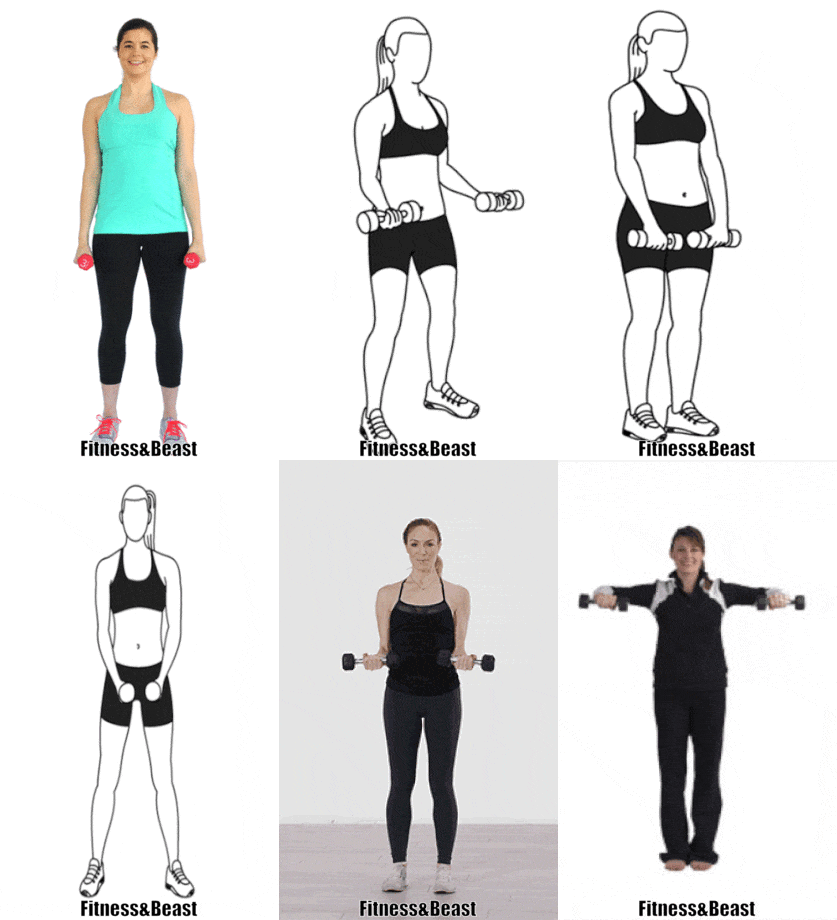
With the smallest dumbbells, for example, 5 kg. Perform the movements shown above, in order, for 15 repetitions each, without rest between sets. These movements will prepare your back and shoulder joints before your workout.

Then move to the lat pulldown machine and, again with a low weight, for example 5-10 kg (determine this yourself based on your strength level), perform 15 repetitions each of front pulldowns, rear pulldowns, wide-grip pulldowns, and close-grip pulldowns, without rest between sets.

Rest for 2-3 minutes, and now you are ready to do your back workout.

Why do we do these? Because you are about to start a heavy back workout.


Back Exercises

We will create a 6-movement back program for you. If your trapezius muscles are sufficiently developed, you can remove it and do 5 movements.

Since the trapezius muscles are connected to the shoulders and shoulder blades, they will automatically be worked in many fitness movements. However, if you still want big traps, you can do additional exercises.

(Trapezius muscles are more suitable for advanced, high-volume bodybuilders. In those with moderate and low volume, they can lead to an undesirable appearance.)

Let’s begin. Click on the movements to read the relevant article and be sure to learn their correct forms.


Lat Pulldown 4 x 10 Reps

back exercises

The Lat Pulldown is the opening movement of our back program and should be performed with heavy weight. Your training history determines what ‘heavy weight’ means for you. The best way to determine heavy weight is to feel a burn and exhaustion in your muscles at the end of 10 repetitions.

4 sets of 10 repetitions is the ideal number. When increasing weight, you can do 4 sets of 10 – 8 – 6 – 6. For the 6-rep sets, you need to use a new, heavier weight, and when performing 10-8-6-6, it is highly beneficial to drop the weight (1/3 of the total weight) without resting after the last set and perform an additional set for maximum repetitions.


Close Grip Lat Pulldown 4 x 10 Reps

back exercises at home

Our second exercise is the close-grip lat pulldown. It is performed with a close grip. Lat pulldowns with wide and close grips work the lat muscles from different angles and help tear muscle fibers that haven’t been torn from different angles. These beneficial tears are repaired by proteins, leading to further muscle growth.

Dumbbell Row 4 x 10 Reps

back exercises

The dumbbell row is also one of the exercises that should be done with heavy weight. The spine is stabilized by the knee and forearm, preventing it from being put at risk. It is our alternative to the Deadlift.

Seated Cable Row 4 x 12 Reps

back exercises

Now it’s time to create a pump effect in our lat and upper shoulder blade muscles that we worked in the previous exercises. In the seated cable row, fully extend your arms and pull your shoulder blades together at the peak of the contraction.

If you’re using moderate weights, you can go up to 15 repetitions to achieve the pump sensation. The pump sensation is recognized by a burning feeling in the muscles.

Reverse Hyperextension 3 x Max Reps

back exercises

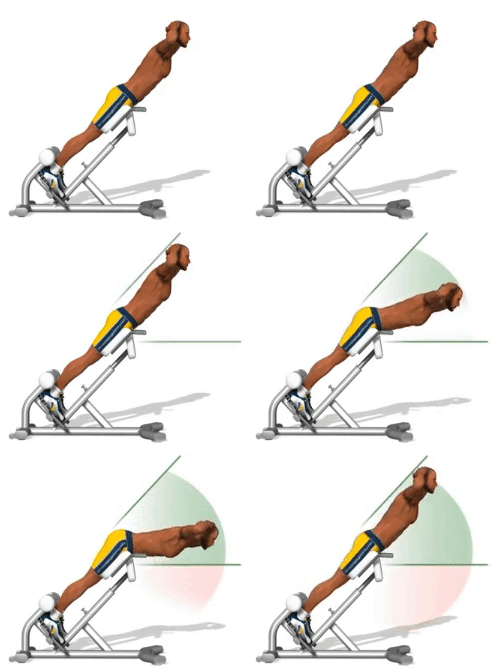
This is one of the safest ways to work our lower back muscles. It effectively works both the lower back and glute muscles. To make the spine stronger, we must include this exercise in our program. If you are doing it for the first time, aim for 5-10 repetitions instead of max reps. You can increase the number over time.

Dumbbell Shrug 3 x Max Reps

back exercises at home

As we mentioned at the beginning. Only do it if you need to. It can be done with dumbbells or weight plates. The trapezius muscle will easily carry heavy loads. A burning sensation and muscle exhaustion should be felt at the end of the sets.


Final Words on Back Exercises

We did not include movements like Deadlift, Sumo Deadlift, T-Bar Row, or Pull-ups in our back program.

If you have sufficient muscle strength and joint endurance, you can use a program like the one below.

If women want to prioritize working their glute and leg muscles, they can use the sumo deadlift back exercise.

Additionally, if we need to share tips for back exercises, these can be done:

You can go heavy for 4 movements and make the last movement pump-focused. Remember, back muscles are large in mass and require heavy weights.

The day before and the day after a back workout, you should either rest or work a smaller muscle group. An example sequence could be: Chest, Shoulders, Back, Arms, Legs, Abs.

If you need more back exercises, we are adding the relevant categories below.

For all back exercises: You can check out the https://fitnessandbeast.com/sirt/ category.

We wish everyone good back workouts.

Fitness | What Is It? | How is it done?

0
Fitness
Fitness


What Is Fitness?

Fit = Suitable, in shape, healthy

Ness = Derivational suffix; -lık, -lik, -lık, -luk, -lük

When these English words, which mean “suitability,” are put together, they form the word “suitability.” As an example; being in good shape means “vitality”, being healthy and happy is “well-being” will be equivalent to these words.

Is exercising essential for being healthy and happy?

If good health is the first requirement for happiness, then exercising is essential for staying healthy.

Let me tell you a little fitness story.

Fiziksel olarak çalışmayan, masa başı mesleği olan bir arkadaş kilo almaya, eklem ağrıları çekmeye ve gücünün giderek azaldığından yakınmaya başlamıştı.

Fitness
Even climbing stairs or walking a short distance was difficult for him. Although his waistline was gradually expanding, his arms and legs—which were not being physically strained—were gradually losing muscle mass.

One day, when he was feeling really tired, he said, “I have to put an end to this,” and signed up at the nearest fitness center.

The instructor there shoved a piece of paper into his hand, demonstrated the movements just once, and then left him to his own devices.

Our friend got carried away on the treadmill for an hour, exercised with improper form and weights, didn’t pay attention to his diet, and as a result, wasted two years of his life.

fitness

He then thoroughly researched fitness exercises, muscle anatomy, and nutrition. He realized his mistakes, started over from scratch, and after 1.5 years, he finally achieved the body he’d always dreamed of.

fitness
Until then, the body she had always dreamed of was simply fit. However, as he grew stronger and regained his self-confidence, simply being in shape was no longer enough for him.

He started lifting heavier weights, doing less cardio, and eating a diet suited to that.

His next goal was to become a bodybuilder. A sleeve circumference of 35–40 cm was too small for him. The goal was to reach the 45–50 cm range.

His clothes were starting to get too small for him. Even though she had to go from a size L to an XL and completely revamp her wardrobe, she was happy now.

fitness

Fitness and bodybuilding.

Fitness reminded him of Brad Pitt, while bodybuilding reminded him of Arnold Schwarzenegger.

He had gotten so used to working out that he started feeling down on any day he didn’t go to the gym.

He used to climb those stairs breathlessly, but now he was running up them. He had forgotten the meaning of the word “fatigue.”

And a happy ending.

Thanks to our friend fitness we had become more “fit” and “energetic” had become had become.

(Who knows, maybe the friend in this story is actually me 🙂 )


How to Work Out?

Fitness can be practiced using body weight, fitness equipment, or fitness machines.

To give an example of an exercise for building chest muscles;

Bodyweight exercise: Push-ups

Exercises using equipment: Dumbbell bench press, chest dips, inverted row

Machine exercises: Chest press machine, pec deck fly

The definitions will be explanatory.

Fitness: Key considerations include performing exercises with proper form and appropriate weights to prevent injuries, paying attention to your diet, and creating a program tailored to your specific needs.

Needs assessment is the most important factor in fitness.

Do you have a belly? Create a calorie deficit, lose weight.

Do you have a hunched posture? Use fitness exercises to support your spine.

Do you have slender legs or a flat butt? Perform exercises targeting the relevant muscle groups.

Fitness—that’s the math behind it. Identify the problem and fix it.

It’s that simple.


Fitness Performing Exercises with Proper Form and Weight

Proper form; This allows you to isolate the target muscle—that is, to place the entire load on it—while reducing the strain on the joints and spine. For example, if your arms aren’t moved at the correct angle during the dumbbell bench press, your shoulder muscles may engage more than your chest muscles.

It would take you years to figure these tips out on your own. If you don’t have that much time, we “strongly” recommend that you read through all the exercises on our website from start to finish, learn exactly how to perform them, and thoroughly understand which muscles each exercise targets.

The correct weight; Consider this, if muscles could develop without needing the right weight just by walking a13> just by walking we would have massive leg muscles we would have. Carrying grocery bags helped build our arm muscles. I wish that were the case, don’t you?

muscle has never been exposed to a load that you will expose a6> load exposed you will leave so that it will tear, with proteins it will be repaired and it will become even more larger. That’s the gist of it.

Hypertrophy, sarcoplasmic hypertrophy, and myofibrillar hypertrophy are key concepts in fitness, but experiments have shown that sarcoplasmic hypertrophy training—which facilitates muscle growth—does not produce the same results in every athlete and may even lead to muscle loss. That’s why, for now, you’ll learn the basics of fitness.

Instead of overwhelming you with so many details, we’ll provide you with general information on topics such as how muscles develop, what you should eat, and how to create a workout plan, and we’ll teach you how to apply this knowledge to your own situation using examples.

As you may have noticed, we’ve focused on muscle development right from the start. Please excuse me.

If your goal is simply to stay fit, maintain a healthy weight, and stay healthy, you can easily engage in fitness without focusing on muscle growth by reducing the number of repetitions and the weight we recommend in our exercise guides and extending your cardio duration slightly.

Fitness—I’ll add a few links for beginners.

For the adaptation process:

Full-Body Workout Program

1. Monthly fitness program

2. Monthly fitness program

Guide to Creating a Fitness Program

Check out their articles.

To see how the movements are performed in the site’s top left section located in the menu tabs related categories and access detailed explanations of the movements by clicking on them.


Fitness and Nutrition

To stay healthy and fit, you need to pay close attention to your diet. Fitness exercises—no matter how perfect your form is—will be in vain if you consume too few or too many calories, proteins, fats, and carbohydrates.

“60% of fitness is done in the kitchen” is a saying I really love and it’s absolutely true to the very end. First of all the following link contains daily calorie requirements determination topics take a look at I’d like you to.

Günlük Kalori | Protein | Yağ | Karbonhidrat İhtiyacı

Make sure to remember this article well.

Final Thoughts

You wanted to start a new, healthy chapter in your life, you read our article, and I hope you felt motivated and decided to start fitness.

Don’t get bogged down in the details right away—like fitness gloves, water bottles, and supplements.

All you need to do is find a nice, clean fitness center. Choose the ones closest to your home. Check whether the equipment and machinery are available or not. If this is a gym that meets your needs, sign up.

Your basic essentials include workout clothes that allow you to exercise (even though high-quality, moisture-wicking products may be expensive, choose items that will keep you comfortable throughout your workout and pay for themselves over time), sneakers specifically for the gym, and a workout towel.

When it comes to training, gyms usually only demonstrate the exercises once (dedicated instructors consistently work with members, but their numbers are dwindling), so instead of just doing exercises randomly, do plenty of research.

Find yourself a buddy (workout partner, bro 🙂 ). Workouts will be more enjoyable and advanced levels you reach you will help each other.

The Fitnessandbeast website is free for all visitors. Don’t hesitate to ask any questions you may have. We’ll do our best to help you.

We wish everyone a great fitness experience.

Warm-up Exercises | What are they? | How are they done?

0
Warm-up exercises
Warm-up exercises

Warm-up Exercises What are they?

Warm-up exercises are short exercises performed before engaging in sports or physical activity. They are performed to prepare the muscles and joints of the target area for activity using light weights.

The commonly held belief is that warming up involves using a treadmill or stretching exercises before a workout, but this is completely wrong. For example, if you’re planning to do shoulder exercises or other upper-body workouts, getting on the treadmill would be pointless.

However, performing stretching exercises before starting a workout can lead to much worse outcomes. Stretching cold muscles that aren’t ready for activity can cause damage to the muscles and joints.

Stretching exercises can be done during or after a workout and are helpful in preventing muscle soreness. Those who have served in the military know this well. The stretching exercises performed after military physical training virtually eliminate all the soreness that would otherwise be felt the next day due to muscle stiffness.

No matter how advanced an athlete you are, you must always perform a warm-up before training. If you fail to do so, you may experience rotator cuff injuries, tendon injuries, ligament injuries, meniscus injuries, and various other joint and muscle injuries.

Head ache cancer diagnosis delivering disaster herald health sites such as we were but these warnings I absolutely had to follow.

Because I suffered from pain in my Achilles tendon, rotator cuff, and triceps tendon for a long time. Once I realized the importance of warm-up exercises, these problems went away.

Now I’m going to show you how to perform the appropriate warm-up exercises for each workout. We’ll start by dividing the areas to be worked out into two groups: the upper body and the lower body.

Whatever workout we’re doing that day—for example, since it includes chest and upper body exercises—we’ll start with an upper body warm-up, and then do a low-weight press and a fly exercise for the chest.

You might be a little confused, but as you read on, things will become clearer.


Upper Body Warm-Up Exercises

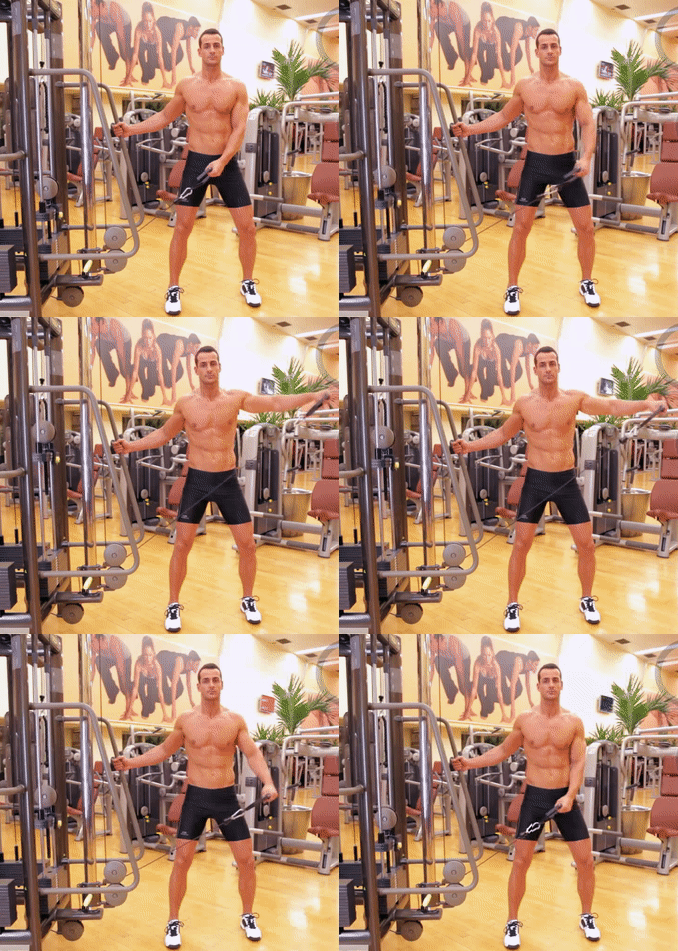
There’s a simple warm-up exercise you should do before chest, shoulder, back, and arm workouts. You’ll perform each movement with the lightest dumbbells, doing 10–15 repetitions. (I showed just 1–2 repetitions in the GIF to save space. Just to avoid any confusion.)

These movements in physical therapy are used flexion, extension, abduction, adduction, rotation, elevation, depression movements suitable for fitness sports as a compilation.

Don’t ask, “What does warming up with shrugs, triceps, and front press exercises have to do with chest training?” The primary function of the chest muscle is to pull the upper arm toward the body, and in doing so, it also performs shoulder rotation. Additionally, the elbow joint is engaged. The anterior deltoid assists in completing the movement under load, and the triceps (the muscle on the back of the upper arm) also works during the lowering phase.

As you can see, a compound exercise engages nearly 3–4 muscles and joints. If you jump into chest press exercises with heavy weights without warming up, at least one of these muscles or joints is bound to cause you problems.

That’s why you should perform the warm-up exercises you saw above before starting any upper-body exercises. Since they’re done quickly and there’s no pausing between movements, they take no more than a minute.


Lower Body Warm-Up Exercises

Lower body warm-up exercises

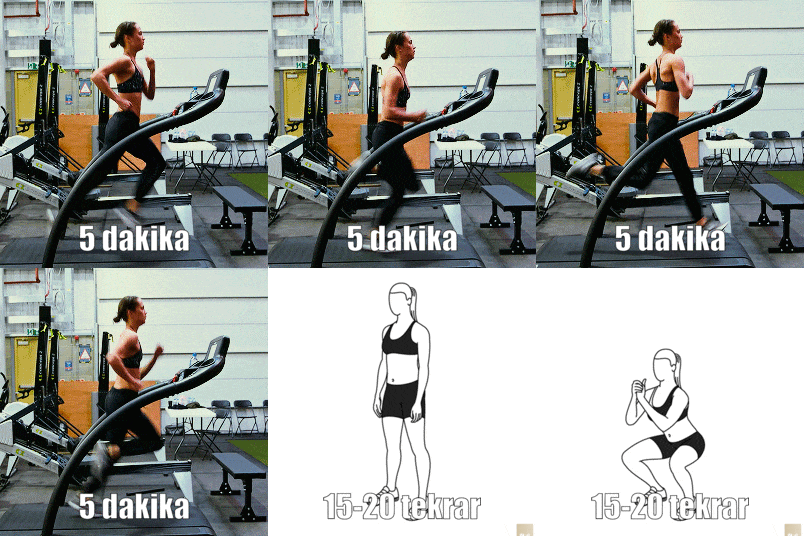
When working out your legs and glutes, a 5-minute moderate-paced run and 15–20 bodyweight squats will be sufficient.


Chest Warm-Up Exercises

After completing the basic upper body warm-up exercise above, let’s say you’re going to start your workout with a chest press and the weight you’ll be lifting is 30 kg. First, do 15–20 reps at a moderate pace with a 10 kg weight. Prepare the muscle for heavy work, and then perform your 30 kg dumbbell press.

We generally use a 1:3 ratio and are satisfied with the results.

Presses are done and then you’ll do fly exercises. Let’s say that you’re using a 15 kg weight . Before starting the exercise again at a moderate pace with 5 kg weights do 15–20 repetitions per set.

The time you’ll spend on the warm-up is 1 minute, the press warm-up is 1 minute, and the fly warm-up is 1 minute. A total of 3 minutes of warm-up exercises will help prevent injuries that could cause you to stop doing this sport.


Shoulder Warm-Up Exercises

After performing the warm-up exercises for the upper body, you can quickly do 15–20 repetitions with a lighter weight—without using heavy weights—for whichever group of shoulder muscles you plan to work on.

For example, you created a program consisting of 6 exercises in total—2 exercises each for the three groups of shoulder muscles: front, middle, and rear.

First up is the middle shoulder, and you’ll start with lateral raises. Before beginning your 4-set routine, perform an additional warm-up set of 15–20 reps at a moderate pace using the lightest dumbbell, fully extending your arms out to the sides. After taking a rest between sets, continue your middle shoulder workout with heavier weights.

You will use the same method for the front and back of the shoulder as well.


Back Warm-Up Exercises

Basic upper body core warm-up exercises first do.

The most common mistake I see when warming up for back exercises is trying to warm up with pull-ups. If you’re overweight, this can be even more dangerous.

Instead, move to the lat pulldown machine and perform 5–10 reps with a light weight using a wide grip, narrow grip, and both forward and backward pulls. Take a rest between sets, then continue your workout.

If you’re going to do deadlifts, start with an empty bar and 10–15 reps to prepare your lower back for the workout. Similarly, you can do 10–15 reps with a light weight using the T-bar row, another exercise performed with heavy loads.

Remember: You’ll do these warm-up sets at the beginning, in addition to your total number of sets.


Arm Warm-Up Exercises

Basic upper-body warm-up exercises will be sufficient on their own. If you’re simply moving up to a new weight—for example, increasing from 15 kg to 17.5 kg on the barbell curl—start your first set with 15 kg and then continue the remaining three sets with 17.5 kg.


Leg and Hip Warm-Up Exercises

Perform the basic warm-up exercises. If you’re doing barbell squats, start with an extra set using an empty barbell to warm up your lower back and glutes.

Keep this in mind: Uncontrolled increases in weight during squats will eventually lead to injury. Your leg, glute, and lower back muscles can handle the load, but your spine isn’t as resilient. Know your limits. If the weight you’re currently using is still allowing you to make progress, don’t increase it.


Abdominal Warm-Up Exercises

You can add an extra warm-up for your abdominal muscles under the following conditions: If you’re using a weight plate while doing crunches, perform your first set without any weight.

If you’re doing weighted leg raises, do a set without weights.


Warm-up well, everyone.

Shoulder Exercises | The Best Ones | Detailed Guide

0
Omuz Hareketleri
Omuz Hareketleri


Hello. We can immediately list 6 of the best shoulder exercises to be used in a shoulder program, but will these 6 best shoulder exercises meet your development needs?

If you are experiencing shoulder muscle development imbalance or have a hunched posture, randomly chosen 6 exercises could worsen these issues.

First, I will teach you about the shoulder muscles, and then how to determine your needs. After learning these, we can share the 6 best exercises.


What Are the Shoulder Muscles?

shoulder exercises

As seen, we can divide the shoulder muscles into three groups: anterior, lateral, and posterior. These are;

Deltoid anterior head: This is the shoulder muscle located at the front of the body. It originates from the clavicle (collarbone) and attaches to the humerus (upper arm bone). It works when lifting the arm forward.

Deltoid lateral (middle) head: This is the middle shoulder muscle located on the outer part of the body. It originates from the clavicle (collarbone) and scapula (shoulder blade), extending to the beginning of the Brachialis (muscle under the biceps) on the humerus (upper arm bone). It works when lifting the arm sideways.

Deltoid posterior head: This is the rear shoulder muscle. It connects the scapula (shoulder blade) to the side of the humerus (upper arm bone). It works when pulling the arm backward.

As you read above, each sub-muscle group moves the arm in different directions. For this reason, a single shoulder exercise or randomly selected exercises cannot be expected to effectively work all sub-muscle groups.


Which Shoulder Exercise?

On shoulder days, we usually start with dumbbell shoulder press, add a barbell shoulder press, then move on to lateral raises, front raises. And let’s throw in a shrug just for good measure.

Let me tell you what will happen if you do it this way. Your anterior shoulder muscles are already actively working on chest days, and on shoulder day, you prioritize the anterior shoulder, going heavy, and it just keeps growing. The posterior shoulder, however, is forgotten. You notice that when you look at your body from the side, it seems to cause a hunched posture.

You already had strong traps genetically. On top of that, you did heavy shrugs, and instead of your back becoming triangular, your neck became triangular…

It might sound a bit exaggerated, a bit like a fairy tale, but we’ve seen these results many times, friends. The shoulder muscle group is more decisive for the overall appearance of the body than others. For this reason, I will teach you how to determine your needs.

shoulder exercises
Shoulder exercises

Look. The image above proves what you might have thought I was exaggerating earlier. If you make unconscious exercise choices, this will unfortunately be your result.

So what should this individual have done? They should have created a 6-exercise shoulder program, dedicating the first two exercises to the lagging muscle group, which is the rear deltoids. The next two exercises should have been dedicated to the moderately developed side, or medial, deltoids.

For the last two exercises, since they were already fatigued and the amount of weight they could lift had decreased, they could have dedicated them to the already well-developed anterior shoulder muscles, or even skipped anterior shoulder exercises entirely if there was a very significant developmental imbalance.

The anterior shoulder already works during chest exercises and during the negative, or eccentric, phase of back movements, friends. The traps work the same way. Every time you try to lift weight from the ground, they work to stabilize the skeleton.

It’s simple to try. Touch your right trap with your left hand and simultaneously lift a light weight with your right hand. You’ll see how it contracts.

The summary is this: Prioritize the lagging muscle group. Add an extra exercise if necessary. Go heavy when your strength is fresh.

This way, you can prevent developmental imbalances and achieve a better appearance.


Best Shoulder Exercises

Now it’s time for the best shoulder exercises. But best according to whom, and based on what? Let’s explain that too.

When choosing exercises, we look at how much a given shoulder exercise works the muscle for its primary function. For example, the posterior shoulder muscle. Its primary function is to pull the arm backward, and the undisputed best exercise for this is the facepull.

Or the middle shoulder muscle. Its primary function is to abduct the arm sideways, and the best exercise for this under load is the lateral raise.

And then experience comes into play. Lateral raise, but which one? First, the heavy load one, like Nautilus lateral raise, and then dumbbell lateral raise with arms fully extended, performed with lighter weight for a pump.

In the exercises I will provide below, I will make a dual ranking for individuals who do not experience developmental imbalance or lag. You, however, will determine the ranking according to your own needs. We will try our best to help you determine your needs in the Q section.

Be sure to click on the exercises above to read and learn how to perform them and their correct forms.


Middle – Lateral Shoulder Exercises

Dumbbell Lateral Raise 4 x 10 reps.

Shoulder exercises

One Arm Cable Lateral Raise 3 x Max reps.

shoulder exercises

For our first shoulder lateral raise exercise, pay attention to using heavy weight. Try to keep your arms fully extended as much as possible to achieve maximum development. For the second exercise, the maximum desired number of repetitions should exceed 15. Again, arms should be fully extended.


Posterior Shoulder Exercises

Facepull 4 x 10 reps.

Rear shoulder exercises

Bent Over Lateral Raise 4 x 10 reps.

fitness

For the 3rd and 4th exercises, we chose the posterior shoulder. As we said, if you are experiencing a lagging posterior shoulder, you can use these first. Go heavy with these two exercises, friends. The posterior shoulder muscles don’t work much in other exercises. Even if they work a little during the eccentric phase of a seated row, it’s not enough. Do these two justice.


Anterior Shoulder Exercises

Dumbbell Front Raise 4 x 10 reps.

program

Dumbbell Shoulder Press 3 x Max reps.

dumbbell shoulder press

We dedicated the last two exercises to the anterior shoulder muscle. Why did we leave them for last? Because this muscle group is constantly working with other movements. Why did we leave the Dumbbell shoulder press, considered the most fundamental shoulder exercise, for last, and on top of that, said 3 sets of maximum reps?

Because we went heavy on the first 5 exercises. The shoulder press works not only the anterior muscle but also in conjunction with others. If performed with moderate weight and maximum reps at the end of the exercise, it provides an excellent pump effect to the muscles we’ve torn by going heavy in other exercises. You’ll be surprised how swollen your shoulders are at the end of the program.


Final Word

The 6 exercises we’ve chosen will ensure significant development in your shoulders. We guarantee it. Were there more effective, heavier exercises we could have included? Of course there were.

For example, the barbell shoulder press. However, to perform this exercise, you need prior experience. Your joints need to be healthy. A rotator cuff tear will keep you away from fitness for a long time.

Additionally, I can almost hear you asking about traps and shrug exercises. The trapezius is a back muscle. Back muscles start from the base of the skull and extend to your lower back. They are actively worked on back days. Given this, we do not include trapezius muscles in the program.

However, if you have a large physique and can properly showcase your trapezius muscles, you can add one of the Dumbbell or Barbell Shrug exercises to the end of your back program. (Upright row, like barbell shoulder press, is also an exercise that should be performed with caution.)

Shoulder exercises are not limited to these 6 movements. You can easily access dozens of shoulder exercises from the menu tab of our website.

Good luck with your workouts everyone.

Bodybuilding | What is it? | How to do it?

0
Bodybuilding
Bodybuilding


What is Bodybuilding?

Bodybuilding is the process of developing muscle fibers, increasing endurance and gaining strength by combining weight lifting, nutrition, cardiovascular training and other practices.

Most of the time it is done for competition. The person who engages in this activity is called a Bodybuilding athlete or bodybuilder.


Bodybuilding History

In ancient Greece and Egypt, weight training was done by lifting stones. 19. Towards the turn of the century, weight training took on a different meaning. The purpose of weight training shifted from an activity to gain strength to a demonstration of that strength to the masses.

Strong men, called strongmen, traveled from town to town, city to city, performing a variety of stunts from lifting carts to lifting animals.

The public paid great attention to these shows at the time and in some shows the athletes competed against each other.

The athletes’ body shape was not important, neither was the shape of their muscles or their fat percentage. The concepts of aesthetics and symmetry sounded very foreign in this period. What mattered was who weighed how much and what they lifted.

As the 20th century approached, one man emerged and bridged the gap between overweight athletes who trained for strength and modern bodybuilding, where form and the appearance of muscles were important.

This man was not only doing power shows, but also showing off his symmetrical and aesthetic body.

This man’s name was Eugen Sandow.

bodybuilding
Eugen Sandow

Bodybuilding became more popular in the 1950s and 1960s with the emergence of strength and gymnastics champions, bodybuilding magazines, training guidelines, protein-based nutrition and supplements.

The number of organizations increased and IFBB (International Federation of BodyBuilding and Fitness) was founded.


Bodybuilding Program

Bodybuilding programs; regional, full body – fullbody, upper body, lower body, front face, back face, combo set, super set, drop set, and so on and so forth.

So which one do we prefer?

I’ll tell you right away. Full body in the beginning to adapt the body, joints, muscles, mind, metabolism. At the end of the adaptation process, we will use regional programs.

The regional program is the most efficient method for muscle development. Muscle groups are worked in order, rested in order and the desired volume is achieved.

If you are committed to this sport, if you are obsessed with bodybuilding, in addition to lifting weights and consuming plenty of protein, you will RESEARCH and READ A LOT. Otherwise, your months or even years will be wasted.

I will add 4 links to help you choose a program. If you are a beginner, follow them in order. If you are advanced, you can go directly to our program preparation guide.

Fullbdody Training Program

Month 1 Fitness Program for Beginners

Month 2 Fitness Program for Beginners

Fitness Program Preparation Guide

It’s not over yet. You also need to get your nutrition right. If you don’t eat right, you may lose more muscle than you gain, or you may gain fat than you gain muscle.

Here is another link to help you understand the logic of nutrition.

Determining Daily Calorie Needs


Bodybuilding Movements

In this sport, it is very important to perform the movements with the correct form, weight and number of repetitions. We have separated all the movements for you according to muscle groups and explained each of them in detail.

As you read and watch how the movements are performed, you will additionally understand which muscles they work and how, and learn the tricks of bodybuilding.

I would like to explain the importance of the tricks a little more. For example, the triceps push down, that is, the movement of pushing the bar from top to bottom with the back arm. In this movement, when you make the stance and grip angle in full form, you can lift more weight.

When you are going to enter a high weight, put one foot forward, bend the knees slightly and try pushing that way. I will tell you the result. Because your foot is in front, the load will not be on your lower back and you will not give up early.

In addition, you will be able to do more repetitions if you apply the breathing times as described in the movement.

We have also indicated the working angles of the joints and muscles, the intervals at which pushing and pulling should be done and for how long.

The sum of these tricks will give you 100% efficiency from the movement.

Be sure to read the movements related to the muscle group you will work from the menu of your site. Don’t say I’ll look from friends at the gym. The most muscular person in the gym is not the most knowledgeable person.

If he achieved his most muscular muscles in 5 years, you can achieve it in 2 years by doing the movements correctly, paying attention to your nutrition, and preparing your own program.

In summary; Read, research, don’t waste your time.

Good sports to everyone.

Full Body Workout Program

0
Full body workout program

Full body workout is a training program where we work all muscle groups in our body on the same day.

The most effective program we can recommend for fitness beginners, those who want to lose weight, and those who want to tone up is the Full body workout program.

The goal of Full body workouts, unlike split and other training types which focus on muscle growth, should be to burn fat by engaging the nervous system, maintain fitness, and adapt the nervous system to fitness for beginners.

In Full body workouts, our repetition count should be between 15-20 reps, not 8-12 reps as in split workouts.

We should also adjust our weights so that we can perform 15-20 repetitions. If we feel nothing in our muscles after completing one set, it means the weights need to be increased.

Especially women’s question, which has become an urban legend: “If I lift weights, will my muscles get big?”

First of all, it is almost impossible for a woman’s muscles to grow excessively and become unsightly through natural means.

Since their bodies do not contain sufficient levels of testosterone, growth like that of men should not be expected.

Furthermore, since the Full body workout program is not a hypertrophy workout, it will not cause growth like other training programs.


(You can access detailed explanations of the relevant exercise by clicking on the movement names)


DAY 1

20 minutes of running should be done at the beginning of the workout. This will increase our body temperature and help with fat burning throughout the workout.


DAY 2

  • TREADMILL / CARDIO / 20 MINUTES

  • BICYCLE / CARDIO / 20 MINUTES

  • ELLIPTICAL / CARDIO / 20 MINUTES

  • BURPEES – JUMPING JACK – MOUNTAIN CLIMBER – SKIPPING ROPE / HIIT / 4 MINUTES

Perform Burpees, Jumping Jacks, Mountain Climbers, and Skipping Rope for 20 seconds each, then rest for 10 seconds. This will last a total of 4 minutes. These are among the most effective fat-burning exercises.

  • CRUNCH / ABS / 3 SETS x 15 REPS

  • LEG RAISE / ABS / 3 SETS x 15 REPS

  • RUSSIAN TWIST / ABS / 3 SETS x 15 RIGHT-15 LEFT

In our Full body workout program, two different days are designated: one day for full body weight training and one day for cardio.

The recommended full body workout is 4 days a week.

  • MONDAY: FULL BODY WORKOUT

  • TUESDAY: CARDIO

  • WEDNESDAY: REST

  • THURSDAY: FULL BODY WORKOUT

  • FRIDAY: CARDIO

  • SATURDAY-SUNDAY: REST


WHO IS PERSONAL TRAINER MERT YILMAZ?


On this journey to lose weight, increase muscle mass, stay in shape, and be healthy, a coach who will put in as much effort as you is very important.

Let your goals be my goals.

I am studying at Ege University, Faculty of Sports Sciences.

I have certifications in Wellness healthy lifestyle coaching, football coaching, and Pilates.

Countless students have achieved their goals and found happiness on this journey with me.

If you have the time but lack the courage, let’s find that courage together.

Our personal trainer packages;

Consists of 12 lessons per month, and a diet plan is included in the package.

For more detailed information;

instagram: @mertyilmazsporakademi

contact no: +90 530 340 0743

About

0
Contact
About
Fitnessandbeast

About

Our website, fitnessandbeast.com/, established in 2016, aims to provide our followers with the most accurate information and training. We are delighted to share with you our years of experience in exercise, supplements, cardio, nutrition, and fitness programmes. All content on our website, including articles, texts, exercise guides, and reviews, is completely free for our followers.

Our fitness instructors, specialist doctor and nutritionist, who will be joining us soon, are committed to assisting our valued followers. Please feel free to consult them at any time, on any subject.

In addition to hundreds of fitness exercises, we are constantly increasing our number of articles on health topics, nutrition programmes, cardio exercises and the programmes of world-renowned bodybuilders. We take your valuable suggestions into consideration. Please let us know if there are any exercises or topics you would like to learn more about in detail.

If you are a gym owner, we would be delighted to publish detailed photographs of your gym, your team of trainers and your history on our website. This will provide sports enthusiasts in your area with preliminary information about your gym.

If you are a supplement supplier, you can promote your products on our fitnessandbeast website. We can only accept your proposed sales partnership with a discount condition exclusively for our members. Our visitors are far more important to us than commerce and money.

We wish everyone a good workout.

With best regards, The Fitness&Beast team.