


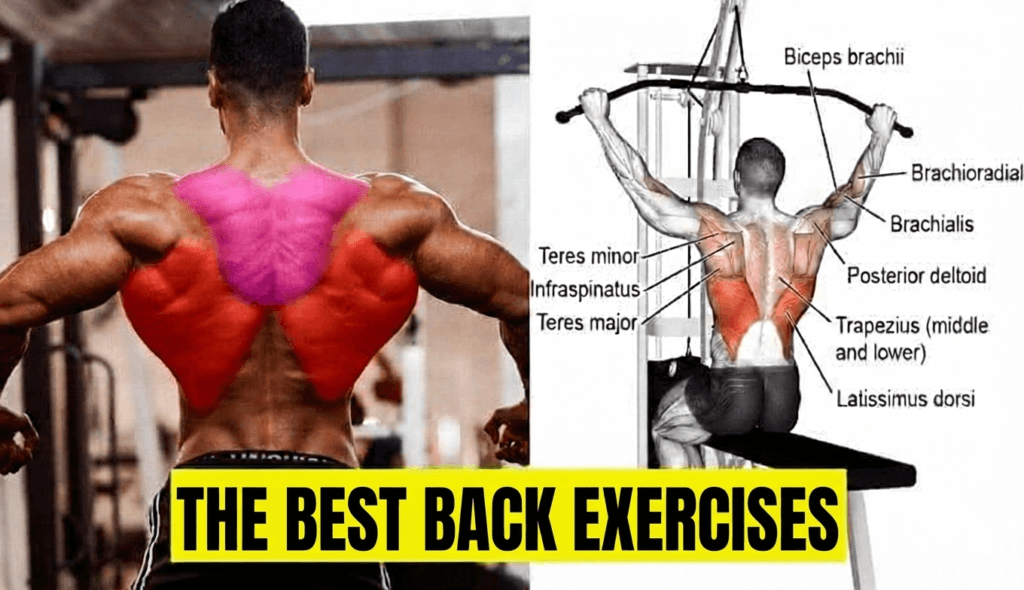
Hello. In this article series, we will focus on back exercises. We will compile the most efficient, most isolated, and safest back exercises, and teach you in what order, with what form and weight, and with what type of warm-up to perform them.
As always, we will choose back exercises that hit the mark. We will avoid movements that can cause long-term injuries and explain why.
First, let’s get to know our back muscles.
Back Muscles

We can divide our back muscles into 4 parts: Trapezius, Lats, Mid-Back, and Lower Back. Let’s learn their names and functions in order.
Trapezius Muscles
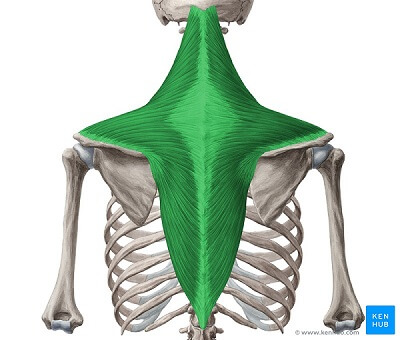
We generally know the trapezius as a muscle extending between the shoulder and neck, but a large part of the muscle forms the mid-back region.
They are divided into 3 parts.
The trapezius muscle starts from the occipital bone, one of the bones at the back of the skull, and extends down to the T12 vertebra. Laterally, it covers the scapula (shoulder blade) and the clavicle (collarbone).
- Trapezius superior part: Forms the upper part of the trapezius muscle. This is the part between the shoulder and the neck.
- Trapezius middle part: Forms the middle part of the trapezius muscle. This is the level where the shoulder blades are located.
- Trapezius inferior part: This is the lowest part of the trapezius muscle. It is the area below the shoulder blades, which we define as the mid-back, and just above our lower back.
Functions of the trapezius muscles: Lifting the shoulder upward with the shoulder blade, moving the skull, pulling the shoulder blade backward, and pulling the shoulder and shoulder blade downward.
Latissimus Dorsi Muscles
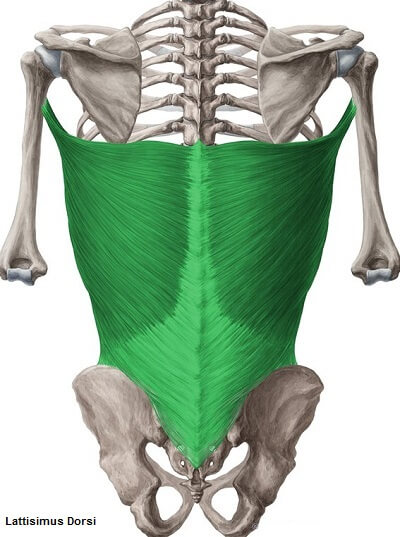
- Latissimus dorsi: Also known as the lat muscle. It extends longitudinally from the tailbone and hip bone up to the starting level of the shoulder blade. Laterally, it attaches to the inner-upper part of the humerus (upper arm bone). Its primary function is to pull the upper arm towards itself and downwards laterally.
Mid-Back Muscles
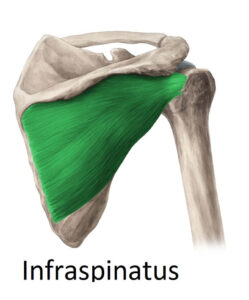
- Infraspinatus: This is the muscle above the scapula (shoulder blade). It attaches to the outer-upper part of the humerus (upper arm bone). It pulls the humerus towards itself, providing external rotation.
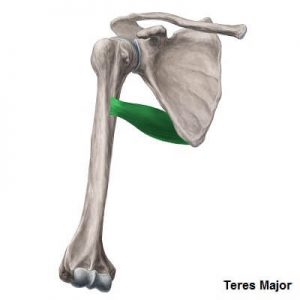
- Teres major: Connects the lower part of the scapula (shoulder blade) to the inner-upper part of the humerus (upper arm bone). It causes internal rotation of the humerus, which has undergone external rotation.
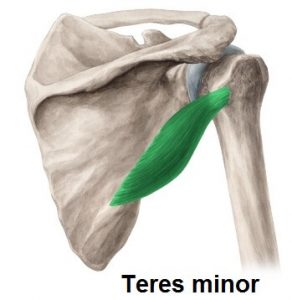
- Teres minor: Located just above the teres major muscle. It connects the scapula (shoulder blade) to the outer-upper part of the humerus (upper arm bone) and causes external rotation of the humerus.
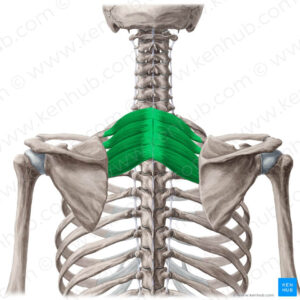
- Serratus posterior superior: Starts by attaching to the spine from the lower end of the neck and connects to the upper-rear part of the ribs.
Lower Back Muscles
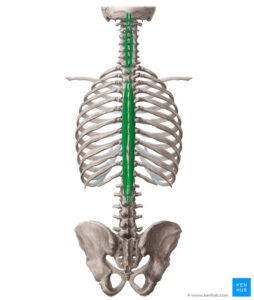
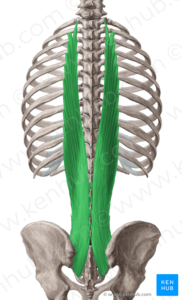
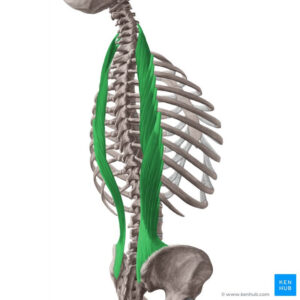
- Spinalis thoracis: Muscles that support the spine and run longitudinally.
- Longissimus thoracis: Starts from the tailbone, passes through the spine, and extends up to the neck.
- Iliocostalis: Starts from the tailbone, passes through the spine, and extends to the upper part of the posterior ribs.
Their primary functions are to keep the spine stable and to perform backward flexion and rotation of the spine.
Now that we’ve learned about our back muscles, let’s determine how to train them.
Choosing Back Exercises
First, identify your needs. Do you need lat development, trapezius, mid-back, or lower back? Perform a general assessment in front of a mirror to determine which muscle to prioritize.
Place your weakest muscle at the top of your program and work with heavy weights while you are fresh. If necessary, you can do 2 exercises targeting that muscle group.
The back exercise program we will prepare shortly will be valid for athletes who do not experience developmental disorders. (We haven’t seen many with developmental disorders in their back muscles, only friends who are unaware of their excessively large traps, whose necks are triangular instead of their bodies.)
And I mentioned that we would choose fundamental movements. For example, we know that the function of the latissimus dorsi – lat muscle – is to pull the humerus (upper arm bone) towards itself. Given this, while Lat Pulldown effectively performs this function for lat development, doing Deadlifts would be somewhat absurd.
I know you love Deadlifts, especially young people. But Deadlifts divide your strength across almost your entire body: legs, glutes, shoulders, back, lower back, arms. It is absolutely not an isolated movement. Does it build strength? Yes, it does. Does it provide confidence? Absolutely, like crazy. But Deadlifts often lead to sports injuries.
If you can recover with a few weeks or months of pain, you should be grateful.
Deadlifts are certainly not to blame for these injuries. The athlete who doesn’t warm up, doesn’t know their limits, and doesn’t understand proper weight progression is to blame.
The person who says, “I feel incredibly strong today. 100 kg is nothing? I’m going to Deadlift 150 kg” will eventually experience that injury.
We do not include movements that put a load on the spine and require a lot of experience in our list.
Over time, if you gain experience, your body adapts to this sport, and you know your limits, you can perform all challenging movements.
Note: Even though we showed beginners the correct form for deadlifts many times, no one could perform it with proper form before 6 months. They could do the movement with an empty bar or a broomstick, but with weight, the form was incorrect. The reason they couldn’t do it wasn’t a lack of understanding the movement, but rather their bodies, joints, and spines not being ready for that load yet.
Warm-up Before Back Exercises
What we observed most often was this: 5 minutes of running before a back workout, followed by 1-2 sets of pull-ups. First, let’s say that warming up is not the same as raising body temperature. Running before back exercises will not benefit you at all.
We explained what warming up means in this article: Warm-up Exercises
Especially if you are overweight and also doing pull-ups, you will both deplete all your strength at the beginning and invite injury.
Let’s describe the warm-up to be done before back exercises.
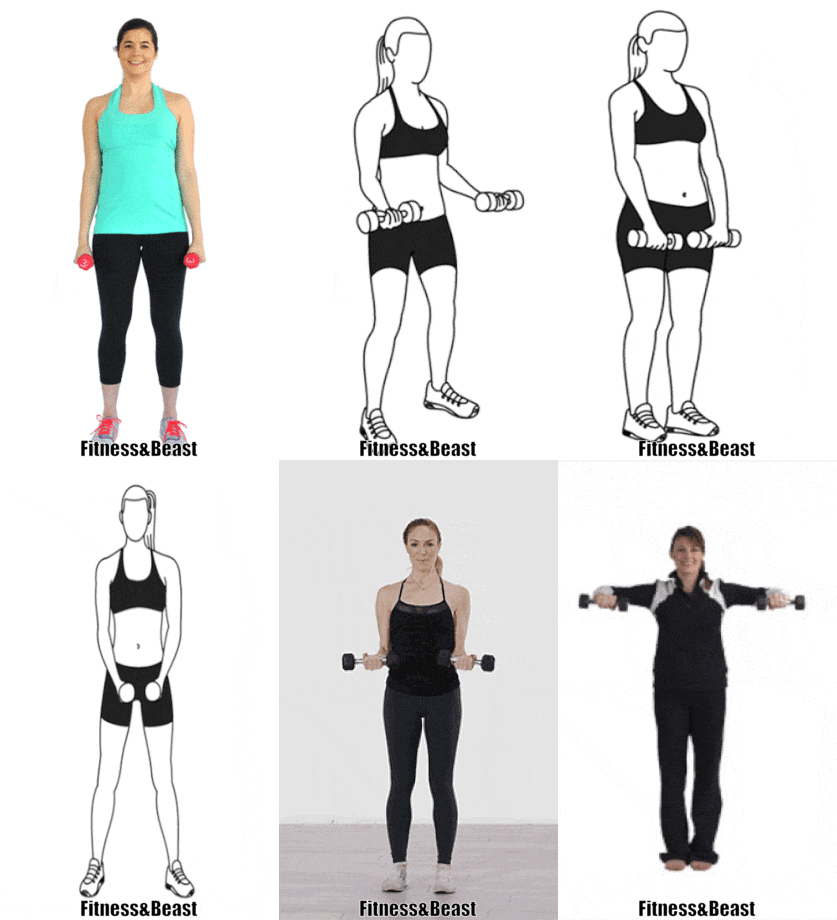
With the smallest dumbbells, for example, 5 kg. Perform the movements shown above, in order, for 15 repetitions each, without rest between sets. These movements will prepare your back and shoulder joints before your workout.
Then move to the lat pulldown machine and, again with a low weight, for example 5-10 kg (determine this yourself based on your strength level), perform 15 repetitions each of front pulldowns, rear pulldowns, wide-grip pulldowns, and close-grip pulldowns, without rest between sets.
Rest for 2-3 minutes, and now you are ready to do your back workout.
Why do we do these? Because you are about to start a heavy back workout.
Back Exercises
We will create a 6-movement back program for you. If your trapezius muscles are sufficiently developed, you can remove it and do 5 movements.
Since the trapezius muscles are connected to the shoulders and shoulder blades, they will automatically be worked in many fitness movements. However, if you still want big traps, you can do additional exercises.
(Trapezius muscles are more suitable for advanced, high-volume bodybuilders. In those with moderate and low volume, they can lead to an undesirable appearance.)
Let’s begin. Click on the movements to read the relevant article and be sure to learn their correct forms.
Lat Pulldown 4 x 10 Reps

The Lat Pulldown is the opening movement of our back program and should be performed with heavy weight. Your training history determines what ‘heavy weight’ means for you. The best way to determine heavy weight is to feel a burn and exhaustion in your muscles at the end of 10 repetitions.
4 sets of 10 repetitions is the ideal number. When increasing weight, you can do 4 sets of 10 – 8 – 6 – 6. For the 6-rep sets, you need to use a new, heavier weight, and when performing 10-8-6-6, it is highly beneficial to drop the weight (1/3 of the total weight) without resting after the last set and perform an additional set for maximum repetitions.
Close Grip Lat Pulldown 4 x 10 Reps

Our second exercise is the close-grip lat pulldown. It is performed with a close grip. Lat pulldowns with wide and close grips work the lat muscles from different angles and help tear muscle fibers that haven’t been torn from different angles. These beneficial tears are repaired by proteins, leading to further muscle growth.
Dumbbell Row 4 x 10 Reps

The dumbbell row is also one of the exercises that should be done with heavy weight. The spine is stabilized by the knee and forearm, preventing it from being put at risk. It is our alternative to the Deadlift.
Seated Cable Row 4 x 12 Reps

Now it’s time to create a pump effect in our lat and upper shoulder blade muscles that we worked in the previous exercises. In the seated cable row, fully extend your arms and pull your shoulder blades together at the peak of the contraction.
If you’re using moderate weights, you can go up to 15 repetitions to achieve the pump sensation. The pump sensation is recognized by a burning feeling in the muscles.
Reverse Hyperextension 3 x Max Reps
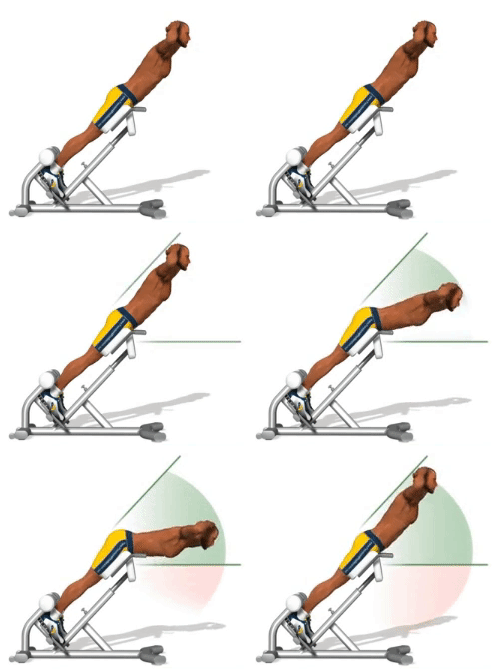
This is one of the safest ways to work our lower back muscles. It effectively works both the lower back and glute muscles. To make the spine stronger, we must include this exercise in our program. If you are doing it for the first time, aim for 5-10 repetitions instead of max reps. You can increase the number over time.
Dumbbell Shrug 3 x Max Reps

As we mentioned at the beginning. Only do it if you need to. It can be done with dumbbells or weight plates. The trapezius muscle will easily carry heavy loads. A burning sensation and muscle exhaustion should be felt at the end of the sets.
Final Words on Back Exercises
We did not include movements like Deadlift, Sumo Deadlift, T-Bar Row, or Pull-ups in our back program.
If you have sufficient muscle strength and joint endurance, you can use a program like the one below.
- Deadlift / Sumo Deadlift (one of the two) 4 x 10 Reps
- Lat Pulldown 4 x 10 Reps
- Pull-ups 4 x Max Reps
- Dumbbell Row 4 x 10 Reps
- Dumbbell Shrug 4 x 10 Reps
If women want to prioritize working their glute and leg muscles, they can use the sumo deadlift back exercise.
Additionally, if we need to share tips for back exercises, these can be done:
You can go heavy for 4 movements and make the last movement pump-focused. Remember, back muscles are large in mass and require heavy weights.
The day before and the day after a back workout, you should either rest or work a smaller muscle group. An example sequence could be: Chest, Shoulders, Back, Arms, Legs, Abs.
If you need more back exercises, we are adding the relevant categories below.
For all back exercises: You can check out the https://fitnessandbeast.com/sirt/ category.
We wish everyone good back workouts.

