Hello. We can immediately list 6 of the best shoulder exercises to be used in a shoulder program, but will these 6 best shoulder exercises meet your development needs?
If you are experiencing shoulder muscle development imbalance or have a hunched posture, randomly chosen 6 exercises could worsen these issues.
First, I will teach you about the shoulder muscles, and then how to determine your needs. After learning these, we can share the 6 best exercises.
What Are the Shoulder Muscles?

As seen, we can divide the shoulder muscles into three groups: anterior, lateral, and posterior. These are;
Deltoid anterior head: This is the shoulder muscle located at the front of the body. It originates from the clavicle (collarbone) and attaches to the humerus (upper arm bone). It works when lifting the arm forward.
Deltoid lateral (middle) head: This is the middle shoulder muscle located on the outer part of the body. It originates from the clavicle (collarbone) and scapula (shoulder blade), extending to the beginning of the Brachialis (muscle under the biceps) on the humerus (upper arm bone). It works when lifting the arm sideways.
Deltoid posterior head: This is the rear shoulder muscle. It connects the scapula (shoulder blade) to the side of the humerus (upper arm bone). It works when pulling the arm backward.
As you read above, each sub-muscle group moves the arm in different directions. For this reason, a single shoulder exercise or randomly selected exercises cannot be expected to effectively work all sub-muscle groups.
Which Shoulder Exercise?
On shoulder days, we usually start with dumbbell shoulder press, add a barbell shoulder press, then move on to lateral raises, front raises. And let’s throw in a shrug just for good measure.
Let me tell you what will happen if you do it this way. Your anterior shoulder muscles are already actively working on chest days, and on shoulder day, you prioritize the anterior shoulder, going heavy, and it just keeps growing. The posterior shoulder, however, is forgotten. You notice that when you look at your body from the side, it seems to cause a hunched posture.
You already had strong traps genetically. On top of that, you did heavy shrugs, and instead of your back becoming triangular, your neck became triangular…
It might sound a bit exaggerated, a bit like a fairy tale, but we’ve seen these results many times, friends. The shoulder muscle group is more decisive for the overall appearance of the body than others. For this reason, I will teach you how to determine your needs.

Look. The image above proves what you might have thought I was exaggerating earlier. If you make unconscious exercise choices, this will unfortunately be your result.
So what should this individual have done? They should have created a 6-exercise shoulder program, dedicating the first two exercises to the lagging muscle group, which is the rear deltoids. The next two exercises should have been dedicated to the moderately developed side, or medial, deltoids.
For the last two exercises, since they were already fatigued and the amount of weight they could lift had decreased, they could have dedicated them to the already well-developed anterior shoulder muscles, or even skipped anterior shoulder exercises entirely if there was a very significant developmental imbalance.
It’s simple to try. Touch your right trap with your left hand and simultaneously lift a light weight with your right hand. You’ll see how it contracts.
The summary is this: Prioritize the lagging muscle group. Add an extra exercise if necessary. Go heavy when your strength is fresh.
This way, you can prevent developmental imbalances and achieve a better appearance.
Best Shoulder Exercises
Now it’s time for the best shoulder exercises. But best according to whom, and based on what? Let’s explain that too.
When choosing exercises, we look at how much a given shoulder exercise works the muscle for its primary function. For example, the posterior shoulder muscle. Its primary function is to pull the arm backward, and the undisputed best exercise for this is the facepull.
Or the middle shoulder muscle. Its primary function is to abduct the arm sideways, and the best exercise for this under load is the lateral raise.
And then experience comes into play. Lateral raise, but which one? First, the heavy load one, like Nautilus lateral raise, and then dumbbell lateral raise with arms fully extended, performed with lighter weight for a pump.
In the exercises I will provide below, I will make a dual ranking for individuals who do not experience developmental imbalance or lag. You, however, will determine the ranking according to your own needs. We will try our best to help you determine your needs in the Q section.
Be sure to click on the exercises above to read and learn how to perform them and their correct forms.
Middle – Lateral Shoulder Exercises
Dumbbell Lateral Raise 4 x 10 reps.

One Arm Cable Lateral Raise 3 x Max reps.
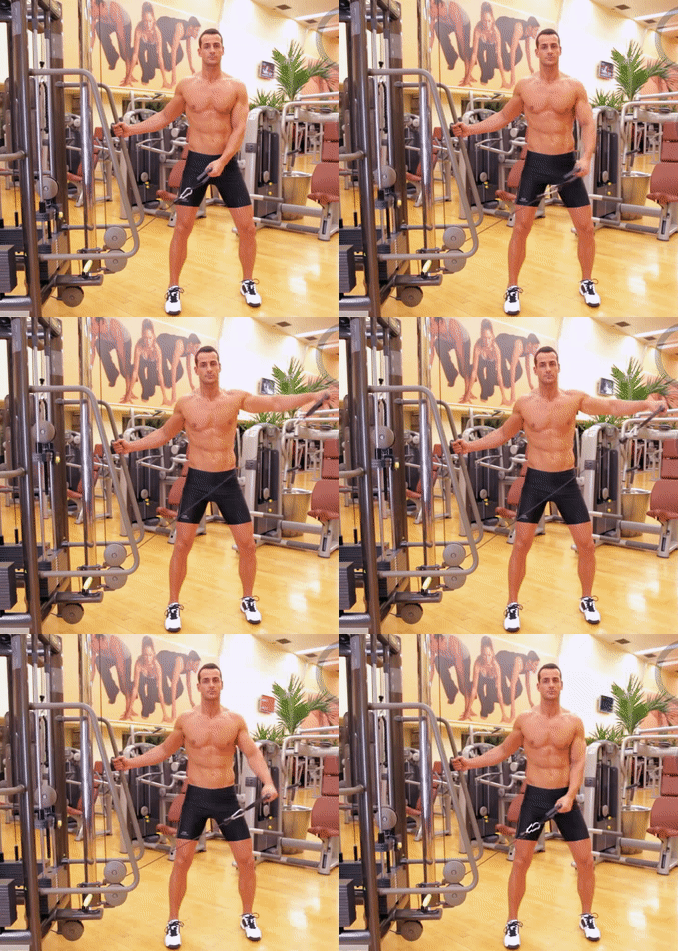
For our first shoulder lateral raise exercise, pay attention to using heavy weight. Try to keep your arms fully extended as much as possible to achieve maximum development. For the second exercise, the maximum desired number of repetitions should exceed 15. Again, arms should be fully extended.
Posterior Shoulder Exercises

Bent Over Lateral Raise 4 x 10 reps.

For the 3rd and 4th exercises, we chose the posterior shoulder. As we said, if you are experiencing a lagging posterior shoulder, you can use these first. Go heavy with these two exercises, friends. The posterior shoulder muscles don’t work much in other exercises. Even if they work a little during the eccentric phase of a seated row, it’s not enough. Do these two justice.
Anterior Shoulder Exercises
Dumbbell Front Raise 4 x 10 reps.

Dumbbell Shoulder Press 3 x Max reps.

We dedicated the last two exercises to the anterior shoulder muscle. Why did we leave them for last? Because this muscle group is constantly working with other movements. Why did we leave the Dumbbell shoulder press, considered the most fundamental shoulder exercise, for last, and on top of that, said 3 sets of maximum reps?
Because we went heavy on the first 5 exercises. The shoulder press works not only the anterior muscle but also in conjunction with others. If performed with moderate weight and maximum reps at the end of the exercise, it provides an excellent pump effect to the muscles we’ve torn by going heavy in other exercises. You’ll be surprised how swollen your shoulders are at the end of the program.
Final Word
The 6 exercises we’ve chosen will ensure significant development in your shoulders. We guarantee it. Were there more effective, heavier exercises we could have included? Of course there were.
For example, the barbell shoulder press. However, to perform this exercise, you need prior experience. Your joints need to be healthy. A rotator cuff tear will keep you away from fitness for a long time.
Additionally, I can almost hear you asking about traps and shrug exercises. The trapezius is a back muscle. Back muscles start from the base of the skull and extend to your lower back. They are actively worked on back days. Given this, we do not include trapezius muscles in the program.
However, if you have a large physique and can properly showcase your trapezius muscles, you can add one of the Dumbbell or Barbell Shrug exercises to the end of your back program. (Upright row, like barbell shoulder press, is also an exercise that should be performed with caution.)
Shoulder exercises are not limited to these 6 movements. You can easily access dozens of shoulder exercises from the menu tab of our website.
Good luck with your workouts everyone.