


Pilates: The Key to Body Harmony and Health
Welcome, dear readers! Today we’re diving into the fascinating world of Pilates — exploring its incredible benefits for both body and mind, the muscles it targets, and how to perform each exercise step by step. Let’s get started!
What Is Pilates?
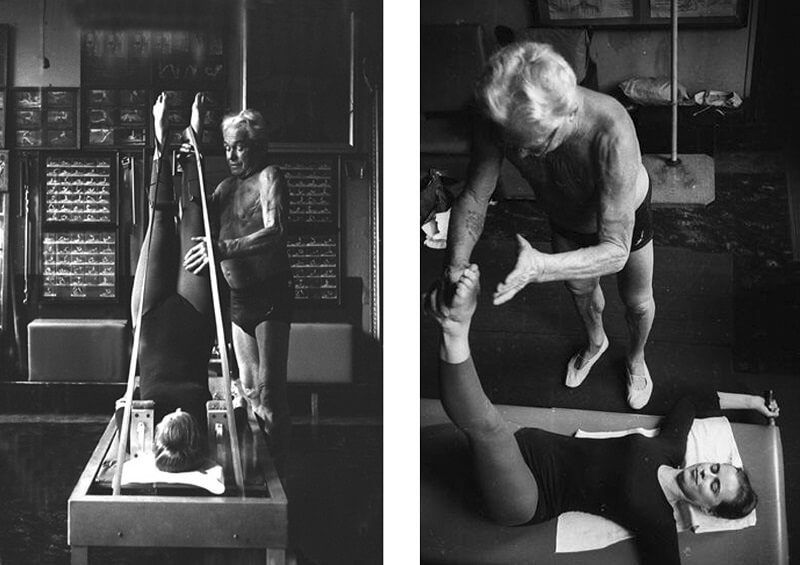
Joseph Hubertus Pilates was born on December 9, 1883, in Mönchengladbach, Germany. His father, Heinrich Friedrich Pilates, who was born in Greece, was a metal worker and an enthusiastic gymnast, while his mother, of German origin, was a homemaker.
Joseph was a sick child. Asthma, rickets and rheumatic fever suffered from and all life to developing his physical strength he devoted. His father introduced him to gymnastics and physical training as well as jiu-jitsu and boxing such as martial arts were introduced to him. 14 years old he was in such good shape that he could pose for anatomical illustrations by the time he reached 14.
Joseph came to believe that the root cause of poor health lay in “modern” lifestyle, bad posture, and inefficient breathing. To address this, he developed his own exercise method and designed the equipment needed to perform these exercises. When he moved to England in 1912, he made a living as a professional boxer, circus performer, and self-defense instructor at police schools and Scotland Yard.
During World War I, British authorities interned Joseph along with other German nationals at Lancaster Castle, where he taught wrestling and self-defense classes — and proudly claimed that his students would emerge stronger than before their imprisonment.
He studied the movements of yoga and animals, and trained his fellow prisoners on fitness and exercise. He noted that the instinctive movements of cats, in particular, inspired his fitness regimen. It was there that he began developing and teaching the minimal-equipment mat exercise system that would later become known as “Contrology.”
He was later transferred to the Knockaloe internment camp on the Isle of Man. During this forced break, he intensively developed the concept of his integrated, comprehensive physical exercise system, which he called “Contrology.”
Contrology is about using the mind to encourage muscular control, with focused attention on the core postural muscles that keep the body balanced and support the spine. Pilates exercises teach body awareness, proper breathing, and spinal alignment, while strengthening the deep trunk and abdominal muscles.
Some of the first instances of the use of Joseph’s exercise methods, seriously injured veterans included their rehabilitation . After the First World War, Joseph returned to Germany andRudolf Laban and dance and physical exercise fields collaborated with leading experts.
He provided training to police officers in Hamburg. He emigrated to the United States around 1925.
He met his future wife, Clara, on the ship bound for America. The couple established a studio in New York and taught and supervised their students directly until the 1960s. Joseph and Clara quickly built a loyal following within New York’s local dance and performing arts community. Renowned dancers such as George Balanchine, who arrived in the United States in 1933, and Martha Graham, who came to New York in 1923, became devoted followers and regularly sent their students to Pilates for training and rehabilitation.
The exercise regimen improved their flexibility, strength, and endurance. Shortly after it became known that ballerinas were attending the Pilates studio on 8th Avenue, society women followed suit.
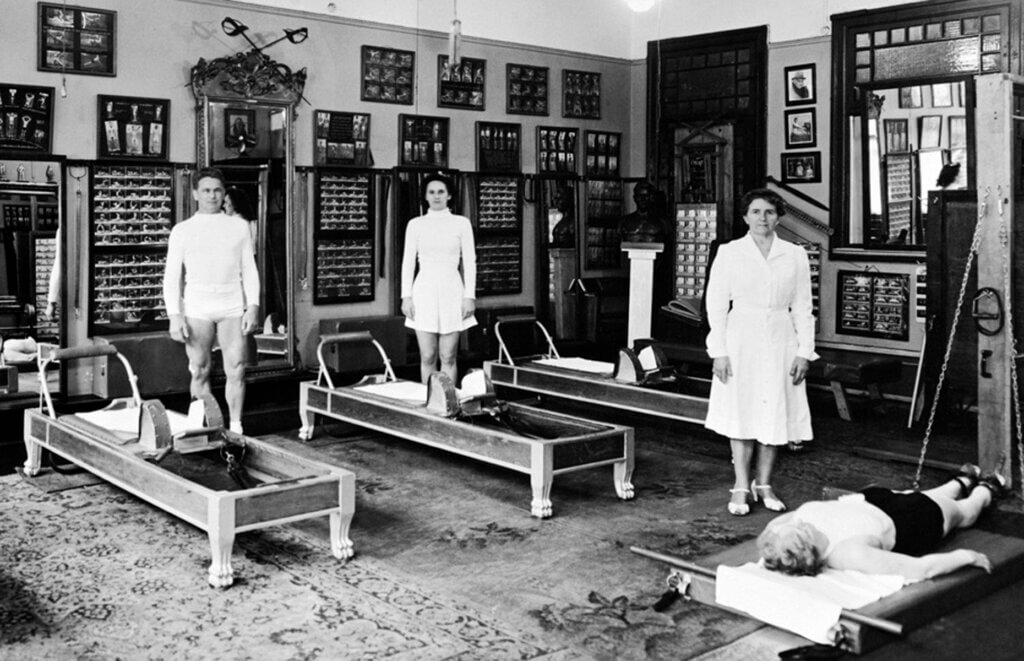
Joseph Pilates, including Contrology and Your Health Through Return to Life as well as featured in many books he wrote and at the same time 26′ and more than 26 patents were cited a prolific and an inventor.
Pilates continued to advocate for and teach his method well into his later years, even though he was no longer physically able to perform the exercises himself. Joseph Pilates died in New York in 1967 at the age of 83 from advanced emphysema.
Pilates How Is it done?
Pilates before starting it, it is important to work with a qualified instructor in this field. Learning the correct techniques and aligning your body properly a19> aligns your body, reduces the risk of injury to the minimum and exercises maximum benefit ensuring helps you. Pilates mat on or using special equipment for various exercises. a38> equipment performed various movements body is worked out. These exercises involve breath control and muscles in a conscious manner a51> manner :
Pilates Mat Exercises: Pilates mat exercises, body weight using performed basic exercises include. abdominal, back, hip, legs and arms muscles strengthens and flexibility improves. Pilates mat exercises, at home with ease is an effective form of workout that you can do.
Pilates Equipment: Pilates exercises performed using specialized equipment such as the reformer, Cadillac, chair, and barrel challenge your body further, allowing you to target your deep muscles. This equipment provides resistance to help you build strength and improve flexibility.
Basic Pilates Exercises
Pilates exercises can vary in difficulty, but the basic movements are essential for every level. Here are some of the basic exercises:
Hundred (Yüz)
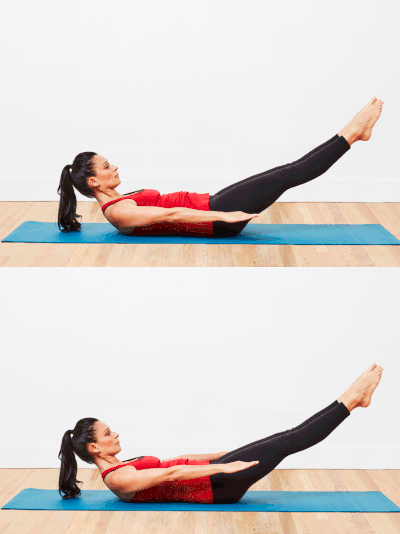
One of the most basic and effective exercises in Pilates is the Hundred, helps strengthen the abdominal muscles.
- Lie on your back, bend your knees, and place the soles of your feet on the floor.
- Rest your head and shoulders on the floor, and spread your arms out to the sides.
- Take a breath and raise your arms up and hold them parallel to the ground as shown in the figure. a8> position hold them.
- Lift your legs off the ground and hold them parallel to the ground and keep them that way.
- As you quickly swing your arms upward, exhale and lift your head and shoulders.
- In this position, breathe in and out 100 times while swinging your arms up and down.
Bridge (Köprü)
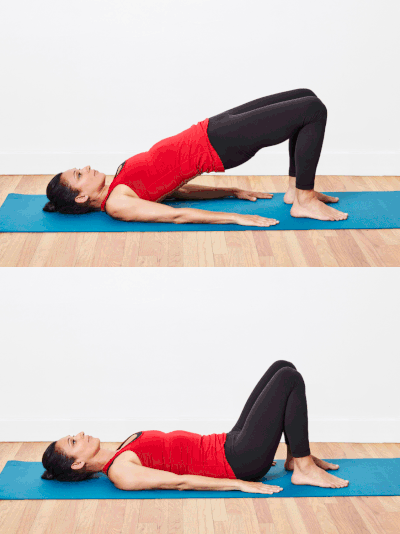
The bridge exercise helps strengthen the hip and lower back muscles and improves spinal flexibility.
- Lie on your back, bend your knees, and place the soles of your feet on the floor.
- Extend your arms out to the sides and position your palms facing the floor.
- As you inhale, lift your hips up to form a bridge over your shoulders.
- In this position, wait a few seconds and then exhale as you slowly return to the starting position.
Plank (Plank Duruşu)

Plank, abdominal, back and arm muscles strengthening for a great exercise is.
- Lie face down on the floor and stretch out, place your hands at shoulder height on the floor.
- Place the tips of your toes on the ground and keep your body straight a straight line so that your body forms a straight line.
- Tighten your abdominal muscles and try to keep your body as straight a8> as straight as possible.
- Hold this position for a few seconds, then return to the starting position.
Teaser (Back-to-Back Sit-Up)

This teaser exercise strengthens the abdominal and gluteal muscles and improves balance.
Lie on your back on the floor, keep your legs straight on the ground, and extend your arms above your head.
Inhale as you lift your head and shoulders, and at the same time lift your legs upward.
Hold this position for a few seconds, then exhale as you return to the starting position.
Child’s Pose
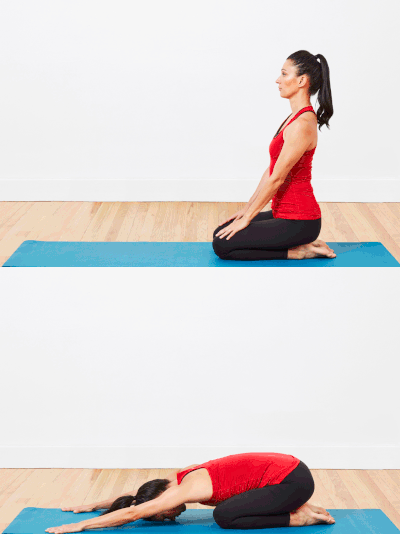
Child’s Pose is a position frequently used in Pilates classes for resting and breathing.
Sit on your knees and lower your hips toward your heels.
Inhale as you stretch your body forward and extend your arms toward the floor.
Lower your head toward the floor and relax.
Which Muscles Does Pilates Target?
Pilates, works out a wide range of muscle groups effectively in a way that engages them. Here are the main muscle groups that Pilates targets:

Abdominal muscles (Rectus Abdominis): Pilates exercises, abdominal region by strengthening “six-pack” as well also known rectus abdominis muscles work out. Properly aligned abdominal muscles, help reduce back pain and a24> posture correction helpful is.

Back muscles (Latissimus Dorsi): The back muscles are important muscles that help maintain good posture. Pilates exercises strengthen the back muscles, improve your posture, and support spinal health.

Gluteal Muscles (Gluteus Maximus): The gluteal muscles play a critical role in maintaining body balance and stability. Pilates exercises strengthen the gluteus maximus muscles, helping to tone the gluteal region and reduce the risk of injury.

Leg Muscles (Quadriceps and Hamstrings): Pilates exercises help strengthen and increase the flexibility of your leg muscles by working them in a balanced way. This helps you feel more energetic in your daily activities.

Shoulder and arm muscles (deltoids and triceps): Pilates strengthens your shoulder and arm muscles, improving your upper body strength. It also helps you achieve sleek, toned arms.
The Health Benefits of Pilates
Pilates not only builds muscle strength but also offers numerous benefits for your physical and mental health. Here are the positive health benefits of Pilates:
Increased flexibility and balance: Pilates exercises increase your body’s flexibility and improve your balance. A flexible body helps you move more comfortably during daily activities and reduces your risk of injury.
Posture correction: When performed with proper technique, Pilates helps align the spine correctly and corrects poor posture habits. This alleviates back pain and helps prevent future health issues.
Stress reduction and mental health: Pilates involves exercises focused on breath control and mental focus. This helps reduce your stress levels, calm your mind, and improve your mood.
Increased muscle strength and endurance: Pilates exercises work all the muscle groups in your body, increasing your strength and improving your endurance. This enables you to lead a more active lifestyle.
Reduced risk of injury and pain: Balanced and mindful muscle engagement reduces the risk of injury and helps alleviate chronic pain. Pilates is also an effective exercise method for rehabilitation.
Tips for Practicing Pilates Correctly
When doing Pilates, you can follow these tips to get the most out of your exercises.
Work with a qualified instructor: Pilates is an exercise method that requires learning proper form and technique. For this reason, it is important to work with a qualified Pilates instructor. Your instructor can create an exercise program tailored to your needs and help you perform the movements correctly.
Be consistent and persistent: To see the benefits of Pilates, you need to exercise regularly. Try to do Pilates at least 2–3 days a week and stick to your exercise routine. As you practice Pilates regularly, you’ll start to notice positive changes in your body.
Use proper breathing techniques: It is important to use proper breathing techniques when performing Pilates exercises. Pay attention to your breathing rhythm and breathe as deeply as possible. Proper breathing techniques help you engage your muscles more effectively.
Move at your own pace: When doing Pilates exercises, it’s important to be aware of your body’s limits. Move at your own pace and be mindful of the risk of injury. If you don’t feel ready to perform a certain movement, focus on easier exercises first and then gradually increase the difficulty.
The Benefits of Pilates
The benefits of Pilates are quite diverse and have positive effects on the entire body. Here’s a more detailed look at the benefits of Pilates:
Improves flexibility: Pilates exercises help improve flexibility. Each movement works by stretching and lengthening the muscles. As a result, flexibility in the body’s muscles and joints increases. People who practice Pilates regularly can move more comfortably in their daily lives and relieve muscle tension.
Body balance: Pilates core stability principle helps the body improve its balance. Centering, refers to the strengthening of the “powerhouse” region of the body known as the powerhouse and abdominal The abdomen, lower back, hip and pelvic bone surrounding muscles strengthening, provides better balance and stability in the body. In daily activities you can move more balanced and coordinated.
Improves posture: Pilates exercises support proper posture by strengthening the spine and the surrounding muscles. Practicing Pilates to correct poor posture habits can help reduce back and neck pain. Additionally, good posture positively impacts your body language and self-confidence.
Increases strength and endurance: Pilates exercises help strengthen the body’s muscles. Exercises that focus specifically on the abdominal, back, hip, and leg muscles make the body stronger. People who practice Pilates regularly feel less fatigue during daily activities and have greater physical endurance.
Relaxation and stress reduction: Pilates requires focusing on proper breathing techniques during exercises. Deep breathing helps calm the mind and reduce stress. As a result, those who practice Pilates experience improved concentration and mental clarity. People who practice Pilates regularly can lower their stress levels and achieve a more peaceful state of mind.
Frequently Asked Questions (FAQs)
Can Pilates help me lose weight? Yes, doing Pilates exercises regularly can help you lose weight. Pilates strengthens muscles, boosts metabolism, and helps reduce body fat percentage.
Can you do Pilates during pregnancy? Yes, it is safe to do Pilates during pregnancy with appropriate modifications, provided you consult your doctor first, and it can help you cope with the changes in your body.
Which is better, Pilates or yoga? Pilates and yoga are different exercise systems, and both offer distinct benefits. You can discover which exercise method is better for you by trying them out.
Is Pilates a suitable form of exercise for athletes? Yes, Pilates is a great form of exercise for athletes as well. Pilates incorporates key elements such as flexibility, balance, and core strength that will enhance your athletic performance.
What kind of clothes should I wear when doing Pilates? It’s important to wear comfortable and flexible clothing during Pilates exercises. By choosing clothes that don’t restrict your body’s movements, you can have a more effective workout.

