


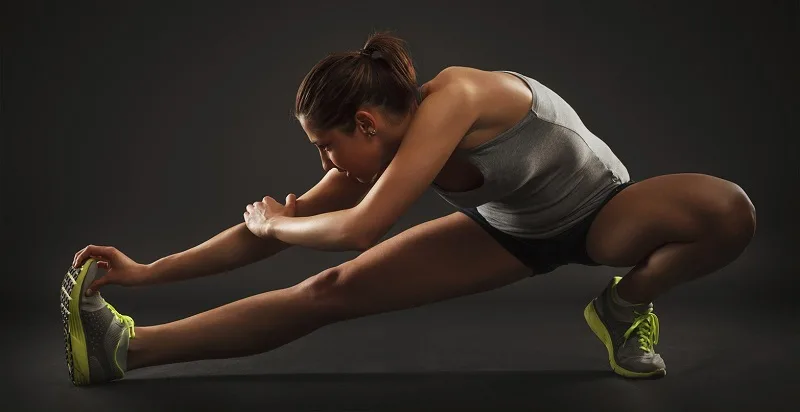
Warm-up Exercises What are they?
Warm-up exercises are short exercises performed before engaging in sports or physical activity. They are performed to prepare the muscles and joints of the target area for activity using light weights.
The commonly held belief is that warming up involves using a treadmill or stretching exercises before a workout, but this is completely wrong. For example, if you’re planning to do shoulder exercises or other upper-body workouts, getting on the treadmill would be pointless.
However, performing stretching exercises before starting a workout can lead to much worse outcomes. Stretching cold muscles that aren’t ready for activity can cause damage to the muscles and joints.
Stretching exercises can be done during or after a workout and are helpful in preventing muscle soreness. Those who have served in the military know this well. The stretching exercises performed after military physical training virtually eliminate all the soreness that would otherwise be felt the next day due to muscle stiffness.
No matter how advanced an athlete you are, you must always perform a warm-up before training. If you fail to do so, you may experience rotator cuff injuries, tendon injuries, ligament injuries, meniscus injuries, and various other joint and muscle injuries.
Head ache cancer diagnosis delivering disaster herald health sites such as we were but these warnings I absolutely had to follow.
Because I suffered from pain in my Achilles tendon, rotator cuff, and triceps tendon for a long time. Once I realized the importance of warm-up exercises, these problems went away.
Now I’m going to show you how to perform the appropriate warm-up exercises for each workout. We’ll start by dividing the areas to be worked out into two groups: the upper body and the lower body.
Whatever workout we’re doing that day—for example, since it includes chest and upper body exercises—we’ll start with an upper body warm-up, and then do a low-weight press and a fly exercise for the chest.
You might be a little confused, but as you read on, things will become clearer.
Upper Body Warm-Up Exercises
There’s a simple warm-up exercise you should do before chest, shoulder, back, and arm workouts. You’ll perform each movement with the lightest dumbbells, doing 10–15 repetitions. (I showed just 1–2 repetitions in the GIF to save space. Just to avoid any confusion.)
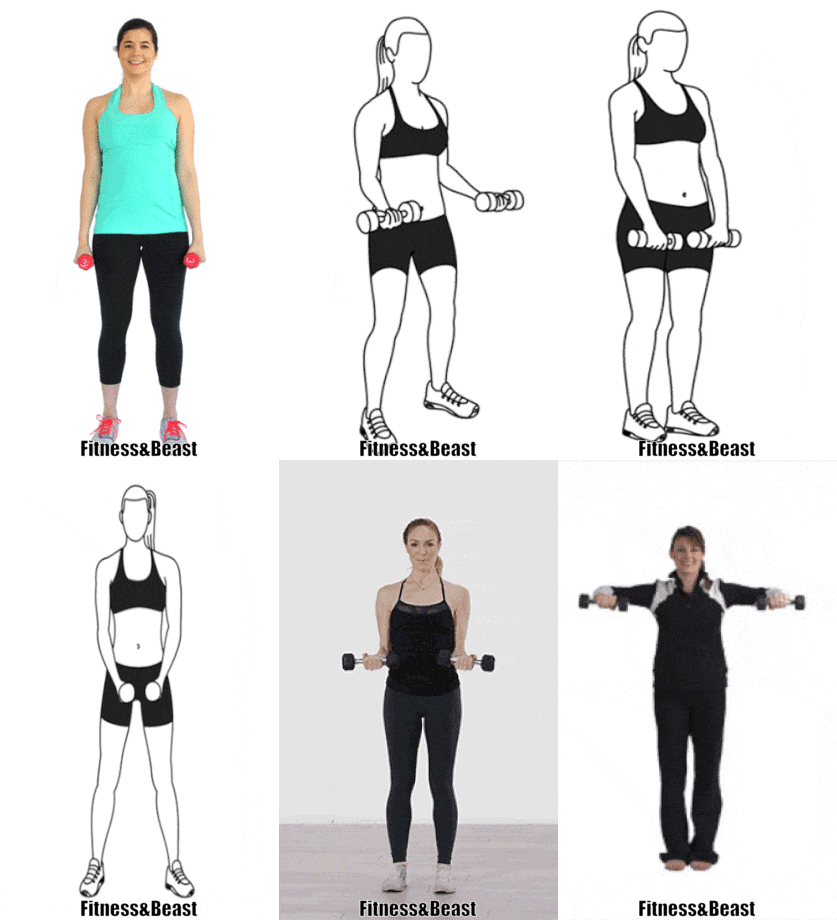
These movements in physical therapy are used flexion, extension, abduction, adduction, rotation, elevation, depression movements suitable for fitness sports as a compilation.
Don’t ask, “What does warming up with shrugs, triceps, and front press exercises have to do with chest training?” The primary function of the chest muscle is to pull the upper arm toward the body, and in doing so, it also performs shoulder rotation. Additionally, the elbow joint is engaged. The anterior deltoid assists in completing the movement under load, and the triceps (the muscle on the back of the upper arm) also works during the lowering phase.
As you can see, a compound exercise engages nearly 3–4 muscles and joints. If you jump into chest press exercises with heavy weights without warming up, at least one of these muscles or joints is bound to cause you problems.
That’s why you should perform the warm-up exercises you saw above before starting any upper-body exercises. Since they’re done quickly and there’s no pausing between movements, they take no more than a minute.
Lower Body Warm-Up Exercises
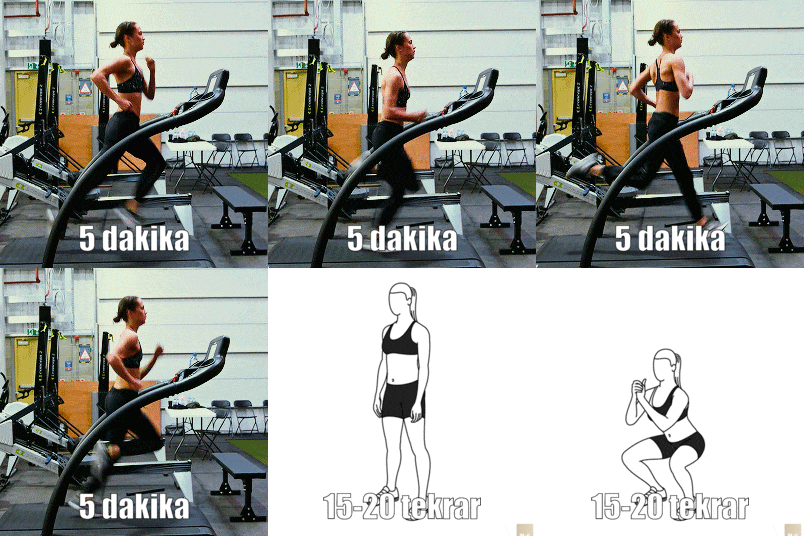
When working out your legs and glutes, a 5-minute moderate-paced run and 15–20 bodyweight squats will be sufficient.
Chest Warm-Up Exercises
After completing the basic upper body warm-up exercise above, let’s say you’re going to start your workout with a chest press and the weight you’ll be lifting is 30 kg. First, do 15–20 reps at a moderate pace with a 10 kg weight. Prepare the muscle for heavy work, and then perform your 30 kg dumbbell press.
We generally use a 1:3 ratio and are satisfied with the results.
Presses are done and then you’ll do fly exercises. Let’s say that you’re using a 15 kg weight . Before starting the exercise again at a moderate pace with 5 kg weights do 15–20 repetitions per set.
The time you’ll spend on the warm-up is 1 minute, the press warm-up is 1 minute, and the fly warm-up is 1 minute. A total of 3 minutes of warm-up exercises will help prevent injuries that could cause you to stop doing this sport.
Shoulder Warm-Up Exercises
After performing the warm-up exercises for the upper body, you can quickly do 15–20 repetitions with a lighter weight—without using heavy weights—for whichever group of shoulder muscles you plan to work on.
For example, you created a program consisting of 6 exercises in total—2 exercises each for the three groups of shoulder muscles: front, middle, and rear.
First up is the middle shoulder, and you’ll start with lateral raises. Before beginning your 4-set routine, perform an additional warm-up set of 15–20 reps at a moderate pace using the lightest dumbbell, fully extending your arms out to the sides. After taking a rest between sets, continue your middle shoulder workout with heavier weights.
You will use the same method for the front and back of the shoulder as well.
Back Warm-Up Exercises
Basic upper body core warm-up exercises first do.
The most common mistake I see when warming up for back exercises is trying to warm up with pull-ups. If you’re overweight, this can be even more dangerous.
Instead, move to the lat pulldown machine and perform 5–10 reps with a light weight using a wide grip, narrow grip, and both forward and backward pulls. Take a rest between sets, then continue your workout.
If you’re going to do deadlifts, start with an empty bar and 10–15 reps to prepare your lower back for the workout. Similarly, you can do 10–15 reps with a light weight using the T-bar row, another exercise performed with heavy loads.
Remember: You’ll do these warm-up sets at the beginning, in addition to your total number of sets.
Arm Warm-Up Exercises
Basic upper-body warm-up exercises will be sufficient on their own. If you’re simply moving up to a new weight—for example, increasing from 15 kg to 17.5 kg on the barbell curl—start your first set with 15 kg and then continue the remaining three sets with 17.5 kg.
Leg and Hip Warm-Up Exercises
Perform the basic warm-up exercises. If you’re doing barbell squats, start with an extra set using an empty barbell to warm up your lower back and glutes.
Keep this in mind: Uncontrolled increases in weight during squats will eventually lead to injury. Your leg, glute, and lower back muscles can handle the load, but your spine isn’t as resilient. Know your limits. If the weight you’re currently using is still allowing you to make progress, don’t increase it.
Abdominal Warm-Up Exercises
You can add an extra warm-up for your abdominal muscles under the following conditions: If you’re using a weight plate while doing crunches, perform your first set without any weight.
If you’re doing weighted leg raises, do a set without weights.
Warm-up well, everyone.

